
Digene: Uses, How It Works, Side Effects
Also known as: Digene tablet, Digene gel, Digene antacid, Digene acidity and gas, Aluminium hydroxide magnesium hydroxide simethicone
Digene is an antacid with an anti-gas medicine, used to relieve heartburn, acid indigestion and trapped gas. It contains aluminium hydroxide and magnesium hydroxide, which neutralise stomach acid, and simethicone, which helps gas bubbles pass. It is for short-term relief, and symptoms that last more than 2 weeks need a doctor.
- Active ingredient
- Aluminium hydroxide VERIFY on pack + Magnesium hydroxide VERIFY on pack + Simethicone VERIFY on pack
- Type of medicine
- Antacids, Anti-flatulents (anti-gas medicines)
- Used for
- Acidity and acid reflux
- Starts working in
- Within minutes, as it neutralises acid already in the stomach
- Effect lasts
- A few hours, so symptoms can return
- With or without food
- Usually taken with or after meals and at bedtime; follow the label or your doctor's advice
- Alcohol
- Alcohol can irritate the stomach and make symptoms worse
- Pregnancy
- Most antacids are considered safe, but ask a doctor or pharmacist first
- Habit-forming
- No
- Made by
- VERIFY on pack
Pharmacist review in progress. This page is based on the sources listed below and is being checked by our registered pharmacist.
On this page
What is Digene used for?
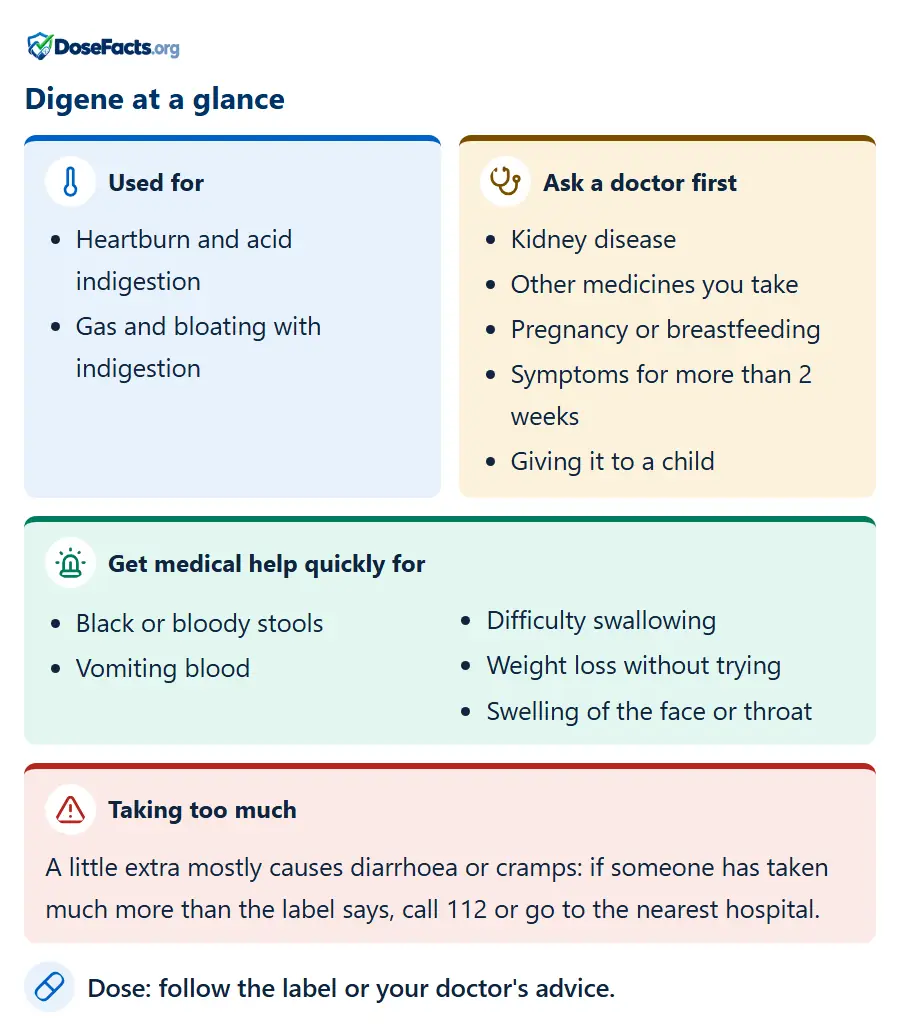
Digene is used for short-term relief of stomach and gut discomfort linked to acid and gas. Check the pack for the exact uses printed on it.
- Relieving heartburn and acid indigestion (acidity)
- Relieving sour stomach and an upset stomach with gas, bloating or fullness
How does Digene work?
Aluminium hydroxide and magnesium hydroxide react with the acid in the stomach and neutralise it, so the stomach contents become less acidic. Simethicone lowers the surface tension of gas bubbles so they join and are easier to pass.
What happens in your body after you take it
You chew or swallow it
The tablet is chewed well, or the gel is taken as the label says. The ingredients mix with the stomach contents.
The antacids meet stomach acid
Aluminium hydroxide and magnesium hydroxide are weak bases. They react with acid and turn it into water and salts, so the burning feeling eases.
Simethicone acts on gas
Simethicone stays in the gut and is not absorbed. It helps small gas bubbles join into larger ones that are passed more easily.
The effect wears off
Stomach acid keeps being made, so relief lasts only a few hours. The leftover ingredients pass out in the stool, and a little magnesium or aluminium can be absorbed.
How to take Digene
Follow the label or your doctor's advice. Digene is meant for short-term relief, and the amount depends on the form and strength on your pack.
- Chew tablets well before swallowing, and take the gel as the label says.
- Antacids are usually taken with or after meals and at bedtime, or when symptoms start.
- Do not use the maximum amount for more than 2 weeks unless a doctor advises.
- Leave a gap of 2 to 4 hours between Digene and other medicines, unless the label or a pharmacist says otherwise.
- Children need lower amounts; do not give it to a child without checking the label or a doctor.
Side effects of Digene
Digene usually causes few side effects when taken occasionally at the amount on the label.
Uncommon or mild
- Constipation (from aluminium) or loose stools (from magnesium)
- Wind or stomach cramps
- Feeling sick or being sick (nausea and vomiting)
Rare but serious: get medical help
- Swelling of the face, lips, tongue or throat, or difficulty breathing (a severe allergic reaction). Get medical help immediately
- Black or bloody stools, or vomiting blood or coffee-ground material
- Severe or lasting stomach pain, or pain with weight loss or difficulty swallowing
- Long-lasting diarrhoea, weakness or confusion, especially with kidney disease (signs of too much magnesium or aluminium)
Who should be careful
Digene is easy to buy, but it is not right for every situation, and long-lasting symptoms need a doctor.
- Kidney disease or a magnesium-restricted diet: ask a doctor first
- Other medicines: antacids can change how they are absorbed, so ask a pharmacist if you take prescription medicines
- Heartburn most days, or symptoms for more than 2 weeks, need a doctor's check
- Difficulty swallowing, repeated vomiting, black stools or weight loss without trying: see a doctor
- Pregnancy and breastfeeding: ask a doctor or pharmacist first
- Check the pack: the composition of products sold under the Digene name can differ
Medicines and things that interact with Digene
Antacids can change how well other medicines are absorbed. Tell your doctor or pharmacist about everything you take.
- Leave a gap of 2 to 4 hours between Digene and other medicines, as the NHS advises
- Some antibiotics (such as tetracyclines and quinolones), iron, thyroid tablets and some heart or bone medicines can be affected; ask a pharmacist how to space them
- Other antacids or magnesium or aluminium products: too much of the same ingredient can build up
If someone takes too much
Taking a little more than the label says mostly causes diarrhoea, constipation or stomach cramps. If someone has taken much more than the label advises, or feels unwell, call 112 or go to the nearest hospital and take the pack with you.
Storage
Store in a cool, dry place in the original pack, away from direct heat and out of the reach of children. Do not use after the expiry date. Check the pack for the exact storage instructions.
Regulatory status in India
Approved for sale in India. The plain combination of aluminium hydroxide, magnesium hydroxide and simethicone was not found on the CDSCO list of medicines banned under section 26A (checked in the extracted list text). Other antacid combinations are banned, including those with zinc carnosine or with alginic acid and sodium bicarbonate, so the composition printed on the pack must be checked.
Other brands with the same medicine
Other brands sell antacids with the same three ingredients, but strengths and extra ingredients differ. Check the label before switching, and ask a pharmacist if unsure.
Other strengths and forms
Digene is sold as tablets and as a liquid or gel, and different products may use different ingredients. The strength and contents are printed on the pack, so check the label of the one you have.
Common questions
What is Digene used for?
Digene is used for short-term relief of heartburn, acid indigestion and gas. It works by neutralising stomach acid and by helping gas bubbles pass. It does not treat the cause of long-lasting acidity, which needs a doctor's check.
How long does Digene take to work?
It starts to work within minutes because it neutralises acid already in the stomach. The effect lasts only a few hours, so symptoms can come back. If you need it most days, see a doctor rather than taking more.
Can I take Digene every day?
Digene is meant for occasional, short-term relief. Labels advise stopping and asking a doctor if symptoms last more than 2 weeks. Needing an antacid regularly can be a sign of a problem that a doctor should look at.
Can I take Digene with my other medicines?
Antacids can change how other medicines are absorbed. The NHS advises leaving a gap of 2 to 4 hours between an antacid and other medicines. Ask a pharmacist how to space your own medicines.
Is Digene safe in pregnancy?
Most antacids are considered safe in pregnancy and breastfeeding, but the NHS advises asking a pharmacist or doctor first. Heartburn is common in pregnancy, so a doctor can suggest what suits you.
Sources
- Antacids. NHS (UK)
- Antacid (aluminum hydroxide, magnesium hydroxide, simethicone) oral suspension: OTC drug label (revised 1/2016). DailyMed, US National Library of Medicine
- List of drugs prohibited for manufacture and sale through gazette notifications under section 26A of the Drugs & Cosmetics Act 1940. Central Drugs Standard Control Organisation (CDSCO)
- ATC/DDD Index: A02AB01 aluminium hydroxide. WHO Collaborating Centre for Drug Statistics Methodology
- ATC/DDD Index: A02AA04 magnesium hydroxide. WHO Collaborating Centre for Drug Statistics Methodology
- ATC/DDD Index: A03AX13 silicones. WHO Collaborating Centre for Drug Statistics Methodology