
Naprosyn 250: Uses, How It Works, Side Effects
Also known as: Naprosyn, Naprosyn 250 mg, Naprosyn 250 tablet, Naproxen 250 mg
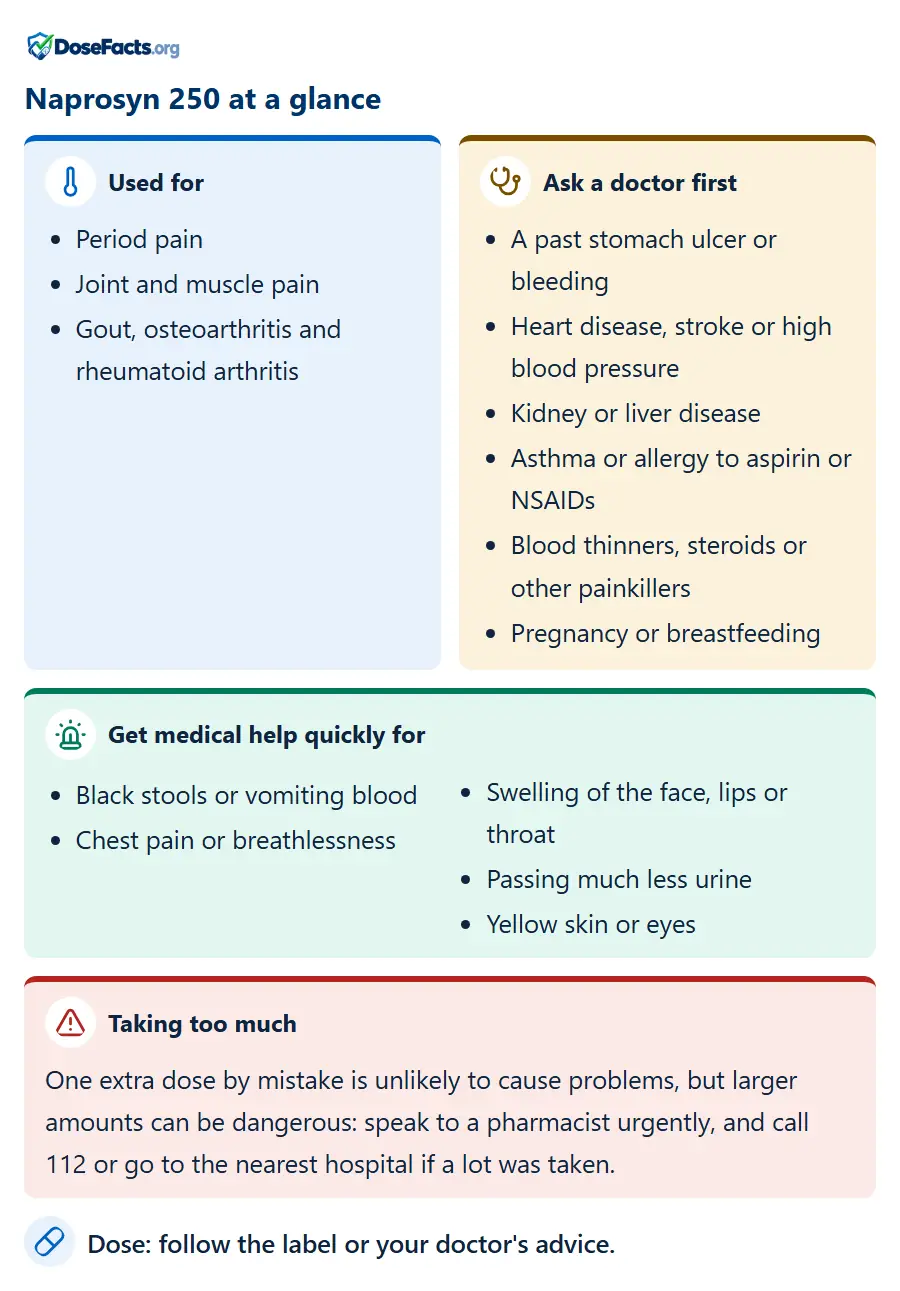
Naprosyn 250 is a prescription tablet containing 250 mg of naproxen, an NSAID used to relieve pain, stiffness and swelling in conditions such as arthritis, joint and muscle pain, period pain and gout. It can irritate the stomach and raise heart, kidney and bleeding risks, so it is used at the lowest dose for the shortest time. It is taken only on a doctor's prescription.
- Active ingredient
- Naproxen 250 mg
- Type of medicine
- Non-steroidal anti-inflammatory drugs (NSAIDs)
- Used for
- Joint pain and arthritis, Period pain
- Starts working in
- Pain relief usually begins within hours; full benefit in long-term joint conditions can take longer
- Effect lasts
- It is usually taken up to three times a day, depending on the form and the reason
- With or without food
- Take with or after food to protect the stomach; follow the label or your doctor's advice
- Alcohol
- Limit alcohol, which raises the risk of stomach ulcers and bleeding; ask your doctor
- Pregnancy
- Generally avoided unless a doctor advises; tell your doctor if you are or may be pregnant
- Habit-forming
- No
- Made by
- VERIFY on pack
Pharmacist review in progress. This page is based on the sources listed below and is being checked by our registered pharmacist.
On this page
- What is Naprosyn 250 used for?
- How does Naprosyn 250 work?
- How to take Naprosyn 250
- Side effects of Naprosyn 250
- Who should be careful
- Medicines and things that interact with Naprosyn 250
- If someone takes too much
- Storage
- Regulatory status in India
- Other brands with the same medicine
- Other strengths and forms
- Common questions
What is Naprosyn 250 used for?
Naprosyn 250 is a prescription medicine. It is used, on a doctor's advice, to relieve pain, stiffness and swelling from several conditions.
- Relieving pain and inflammation in osteoarthritis and rheumatoid arthritis
- Relieving joint and muscle pain
- Easing period pain
- Relieving the pain and swelling of gout attacks
How does Naprosyn 250 work?
Naproxen blocks enzymes called COX-1 and COX-2, which the body uses to make prostaglandins. Prostaglandins cause pain, swelling and heat in damaged or inflamed tissue, so with fewer of them the pain and swelling ease. The same enzymes help protect the stomach lining, which is why it can upset the stomach.
What happens in your body after you take it
You swallow the tablet
The tablet is swallowed with water, ideally with or after food. It dissolves in the gut and naproxen passes into the blood.
It travels in the blood
Naproxen is carried around the body and reaches inflamed joints, muscles and other tissues.
It blocks COX enzymes
In the tissues, naproxen blocks the COX-1 and COX-2 enzymes that make prostaglandins, the chemicals that cause pain, swelling and heat.
Pain and swelling ease
With fewer prostaglandins, pain and swelling settle. The condition itself is not changed, only the symptoms are eased.
The body clears it
The medicine is broken down and removed from the body over the following hours, which is why doses are repeated. The same enzymes protect the stomach lining, which is why the stomach can be upset.
How to take Naprosyn 250
Follow the label or your doctor's advice. Naproxen is usually taken with or after food, and your doctor decides the dose, how often and for how long.
- Take Naprosyn 250 exactly as your doctor has prescribed or as printed on the pack.
- Swallow it whole with water, with or after food. Follow the label or your doctor's advice.
- It is used at the lowest dose that works for the shortest time.
- If you miss a dose, take it when you remember unless the next dose is nearly due. Do not take two doses together.
- Do not combine it with other NSAIDs such as ibuprofen or diclofenac unless a doctor advises.
- If pain does not improve or gets worse, go back to your doctor.
Side effects of Naprosyn 250
Most people take naproxen without serious problems. Some side effects are common and mild, but a few need medical help.
Uncommon or mild
- Constipation or diarrhoea
- Dizziness, tiredness or sleepiness
- Bloating, stomach pain, nausea or vomiting
- Headache
- Skin rash
- Ringing in the ears
Rare but serious: get medical help
- Black or bloody stools, vomiting blood or severe stomach pain (possible stomach ulcer or bleeding). Get medical help at once
- Chest pain, breathlessness or weakness on one side of the body (possible heart attack or stroke). Call 112
- Swelling of the face, lips, tongue or throat, or difficulty breathing (severe allergic reaction). Call 112
- Swollen ankles, or passing much less urine than usual (possible kidney problems or heart failure)
- Unusual bruising or bleeding, or yellow skin or eyes
Who should be careful
Some people need to check with a doctor before taking naproxen, or need extra care while taking it.
When the label says not to use it
- Allergy to naproxen, aspirin, ibuprofen or another NSAID
- An active stomach ulcer or bleeding
- Pregnancy, unless a doctor specifically advises it
- Severe heart, liver or kidney failure
- Stomach: a past stomach ulcer or bleeding makes naproxen risky; the risk is higher with age, alcohol, steroids or blood thinners
- Heart and circulation: NSAIDs can raise the risk of heart attack and stroke, mainly with high doses or long use; tell your doctor about heart disease, stroke or high blood pressure
- Kidney or liver disease, or dehydration
- Asthma, or a past allergic reaction to aspirin, ibuprofen or another NSAID
- Bleeding or clotting problems
- Pregnancy: avoid unless a doctor advises; paracetamol is usually the usual choice
- Breastfeeding: not usually used because small amounts pass into breast milk; ask your doctor
- Do not take it with other NSAIDs such as ibuprofen, diclofenac or aspirin unless a doctor advises
Medicines and things that interact with Naprosyn 250
Naproxen can change how other medicines work, and some medicines raise its risks. Tell your doctor or pharmacist about everything you take, including painkillers bought over the counter.
- Blood thinners such as warfarin: higher risk of bleeding
- Steroid tablets such as prednisolone: higher risk of stomach ulcers
- Other NSAIDs such as ibuprofen, diclofenac or aspirin: higher risk of stomach ulcers and bleeding
- Blood pressure medicines and water tablets (diuretics): they may work less well and the kidneys can be strained
- Antidepressants such as citalopram: higher risk of stomach bleeding
- Methotrexate: its blood level can rise
- Alcohol: raises the risk of stomach ulcers and bleeding
If someone takes too much
One extra dose by mistake is unlikely to cause problems, but taking more than the label says can be dangerous. Speak to a pharmacist or doctor urgently, and call 112 or go to the nearest hospital if someone has taken a lot or has taken extra on purpose. Take the medicine pack with you.
Storage
Store below 30 C in a dry place, protected from light and moisture, in the original strip, and out of the reach of children. Do not use after the expiry date. Check the pack for the exact storage instructions.
Regulatory status in India
Approved for sale in India as a prescription medicine; Naprosyn 250 contains naproxen only; naproxen is listed in Schedule H of the Drugs Rules 1945 (entry 345). Single-ingredient naproxen is not on the CDSCO list of medicines banned under section 26A of the Drugs and Cosmetics Act. The combination naproxen + paracetamol is on that banned list, so check the ingredient list on the pack.
Other brands with the same medicine
Naproxen 250 mg tablets are sold under other brand names and as generic medicines. They contain the same medicine. Some products with a similar name, such as Naprosyn D or Naprosyn 250 Plus, contain other medicines or a different amount, so check the label and do not switch without asking your doctor.
Other strengths and forms
Naproxen is sold in other strengths and as liquids or effervescent forms, and in some countries in combinations. The strength and contents are printed on the pack, so check the label of the one you have.
Common questions
Is Naprosyn 250 a prescription medicine?
Yes. Naproxen is a prescription-only medicine in India. Take it only if a doctor has prescribed it, and do not start, stop or change it without the doctor's advice.
What is Naprosyn 250 used for?
It is used to relieve pain and swelling in conditions such as arthritis, joint and muscle pain, period pain and gout. It eases symptoms but does not treat the cause of the disease. A doctor decides whether it suits you.
Should I take Naprosyn 250 on an empty stomach?
The NHS advises taking naproxen with or after food, which helps protect the stomach. Taking it with alcohol raises the risk of stomach ulcers. Follow the label or your doctor's advice.
Can I take Naprosyn 250 with another painkiller?
Not with another NSAID such as ibuprofen or diclofenac, because the stomach risk rises. Paracetamol is sometimes used alongside for a short time, but check with your doctor or pharmacist first.
Can I take Naprosyn 250 during pregnancy?
Naproxen is generally avoided in pregnancy unless a doctor advises it, and paracetamol is usually the usual choice. Tell your doctor if you are pregnant, may become pregnant or are breastfeeding.
What is the difference between Naprosyn 250 and Naproxen 250 mg?
Naprosyn is a brand name and naproxen is the medicine inside it. Generic naproxen 250 mg tablets contain the same active ingredient. Check the strength and ingredients on the pack and ask your doctor before switching.
Sources
- Naproxen for pain and inflammation. NHS (UK)
- ATC/DDD Index: M01AE02 Naproxen. WHO Collaborating Centre for Drug Statistics Methodology
- List of drugs prohibited for manufacture and sale through gazette notifications under section 26A of the Drugs & Cosmetics Act 1940. Central Drugs Standard Control Organisation (CDSCO)
- The Drugs Rules, 1945 (consolidated, September 2024 edition), Schedule H: prescription drugs. Central Drugs Standard Control Organisation (CDSCO)