
Soframycin: Uses, How It Works, Side Effects
Also known as: Soframycin skin cream, Soframycin 1% cream, Soframycin cream, Framycetin 1% cream, Framycetin sulphate cream
Soframycin is a skin cream containing 1% framycetin, an antibiotic used to treat bacterial skin infections, including infected wounds and burns. It is applied to the skin only and works on bacteria, not on fungal or viral rashes. It is a prescription medicine, and the doctor or pack decides how often and for how long to use it.
- Active ingredient
- Framycetin 1%
- Type of medicine
- Topical antibiotics
- Used for
- Bacterial skin infections
- Starts working in
- Improvement is usually seen over a few days; see a doctor if the skin is not better or is getting worse
- Effect lasts
- It acts where it is applied, so it is applied more than once a day as the doctor or pack advises
- With or without food
- Not applicable, it is applied on the skin
- Alcohol
- No known effect when it is used on the skin
- Pregnancy
- Ask your doctor before using it in pregnancy or while breastfeeding
- Habit-forming
- No
- Made by
- VERIFY on pack
Pharmacist review in progress. This page is based on the sources listed below and is being checked by our registered pharmacist.
On this page
- What is Soframycin used for?
- How does Soframycin work?
- How to take Soframycin
- Side effects of Soframycin
- Who should be careful
- Medicines and things that interact with Soframycin
- If someone takes too much
- Storage
- Regulatory status in India
- Other brands with the same medicine
- Other strengths and forms
- Common questions
What is Soframycin used for?
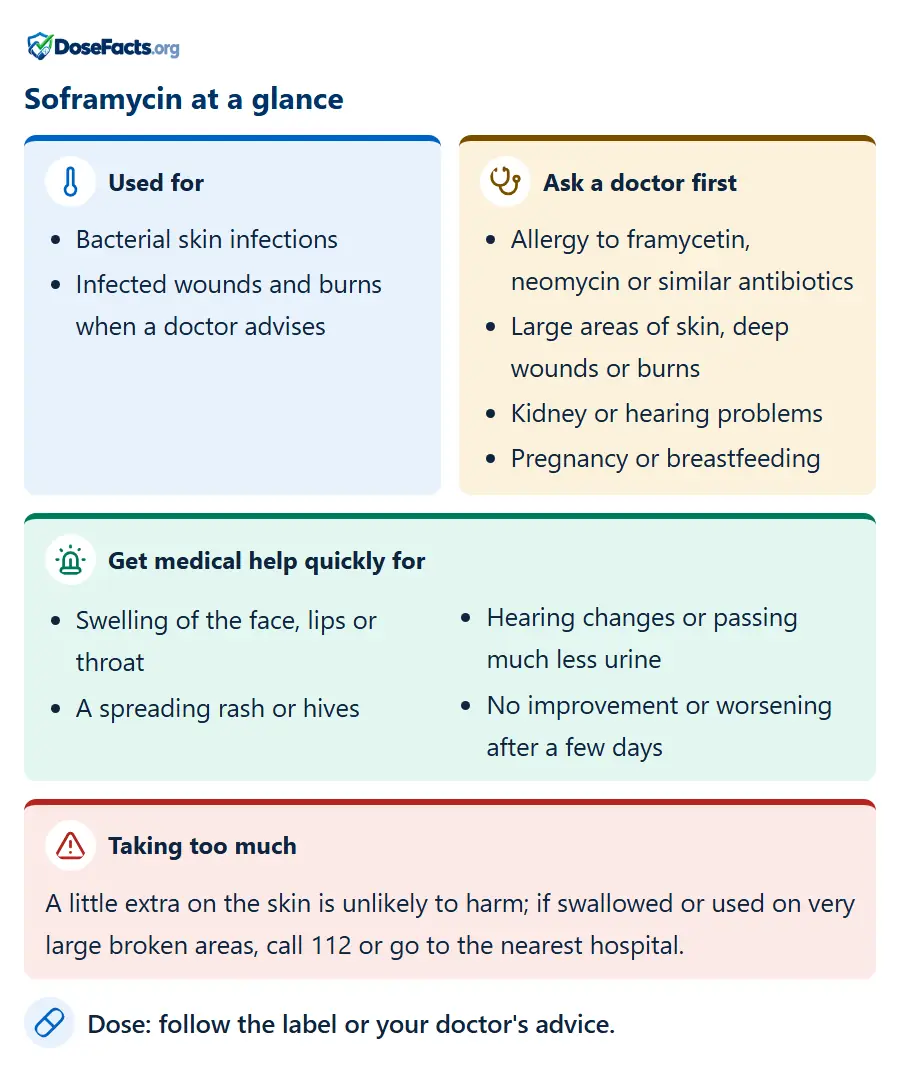
Soframycin is a prescription antibiotic skin cream. It is used, on a doctor's advice, to treat bacterial infections of the skin.
- Bacterial skin infections
- Infected wounds, burns, ulcers and graft sites, when a doctor advises it
How does Soframycin work?
Framycetin is an aminoglycoside antibiotic. It attaches to the part of bacteria that builds proteins, so the bacteria cannot grow and many die. It works only on bacteria and has no action on fungi or viruses.
What happens in your body after you take it
You apply the cream
A thin layer of cream is applied to the clean infected skin, as the doctor or pack advises.
It stays at the skin
Framycetin acts on the surface and in the upper layers of the skin. Only a tiny amount is expected to enter the blood when small areas are treated.
It reaches the bacteria
The antibiotic enters susceptible bacteria such as staphylococci and attaches to their protein-making machinery.
Bacteria stop growing
Without new proteins the bacteria cannot grow, and many die. This lets the body clear the infection and the skin heal.
Rubbed or washed away
The cream wears off or is washed away, which is why it is reapplied as advised. A very large treated area can let more enter the blood and be cleared by the kidneys.
How to take Soframycin
Use Soframycin exactly as your doctor has prescribed or as printed on the pack. The doctor decides how often and for how long.
- It is applied to the affected skin only, usually as a thin layer, as directed.
- Wash your hands before and after applying it, and keep the tube clean.
- If you miss an application, apply it when you remember, but do not apply extra to make up for it.
- Do not use it for longer than advised. Long use can let other germs, including fungi, grow.
- See your doctor if the skin is not better after a few days or is getting worse.
Side effects of Soframycin
Most people have no problems when Soframycin is used on small areas of skin, but a few develop a local reaction.
Uncommon or mild
- Burning, stinging or itching where it is applied
- Redness or irritation of the skin
- Contact dermatitis (an itchy, red rash where the cream was applied)
Rare but serious: get medical help
- A spreading rash, swelling or hives, which may be an allergy. Stop using it and get medical help
- Swelling of the face, lips or throat, or difficulty breathing. Get medical help immediately
- Hearing changes or passing much less urine after treating a very large area of skin
Who should be careful
Some people need to check with a doctor before using Soframycin.
When the label says not to use it
- Allergy to framycetin or to the other ingredients of the product
- Infection with bacteria that framycetin does not kill
- Do not use it if you are allergic to framycetin, neomycin or similar antibiotics, or any ingredient in the cream
- Very large areas of skin, deep wounds or burns: some of the antibiotic can enter the blood and affect hearing and the kidneys
- Long use can let other organisms, including fungi, grow
- Kidney problems or hearing problems: ask a doctor first
- Pregnancy and breastfeeding: ask a doctor first
- Keep it away from the eyes
Medicines and things that interact with Soframycin
Used on small areas of skin, Soframycin is not known to interact with many medicines. Tell your doctor or pharmacist about all the creams and medicines you use.
- Other creams or ointments on the same area: ask a doctor or pharmacist before combining
- Other aminoglycoside antibiotics (taken or injected): the risk of ear and kidney effects adds up if framycetin is absorbed from a large area
If someone takes too much
Applying a little too much to the skin is unlikely to be serious. If it is swallowed or a large amount is used on broken skin, call 112 or go to the nearest hospital and take the tube with you.
Storage
Store in a cool, dry place away from direct sunlight, with the cap closed tightly and out of the reach of children. Do not use after the expiry date. Check the pack for the exact storage instructions.
Regulatory status in India
Approved for sale in India as a prescription antibiotic skin cream. Single-ingredient framycetin does not appear in the CDSCO list of medicines banned under section 26A of the Drugs and Cosmetics Act. Soframycin cream contains framycetin only; check the ingredient list on the pack, since combination creams are treated differently.
Other brands with the same medicine
Framycetin 1% cream is sold under other brand names. They contain the same antibiotic; check the label for the strength. Some other creams combine framycetin with other medicines, so do not switch between them without asking your doctor or pharmacist.
Other strengths and forms
Framycetin is also available in other forms and in combination products. The contents are printed on the pack and are not the same across products, so check the label of the one you have.
Common questions
Is Soframycin a prescription medicine?
Yes. Soframycin is an antibiotic cream and should be used only on a doctor's advice for the time prescribed. Do not use leftover cream on a new rash, because an antibiotic cream does nothing for fungal, viral or allergic rashes.
What is Soframycin cream used for?
It is used to treat bacterial skin infections, including infected wounds and burns, when a doctor advises it. It does not work on fungal infections such as ringworm, or on viral problems like cold sores.
Can I use Soframycin on a large area or a deep wound?
Only if your doctor advises it. On large areas, deep wounds or burns, some of the antibiotic can be absorbed and affect hearing and the kidneys. Ask your doctor before covering a big area of skin.
Can I use Soframycin if I am allergic to neomycin?
Tell your doctor first. Framycetin and neomycin are related antibiotics and cross-reactions can happen. Mention any earlier reaction to an antibiotic cream, ointment or eye or ear drop.
How long can I use Soframycin?
Use it only for the time on the pack or advised by your doctor. Long use can let other germs, including fungi, grow. See your doctor if the skin is not improving after a few days or is getting worse.
Can I use Soframycin in pregnancy or while breastfeeding?
Ask your doctor or pharmacist first. No firm advice is available from the sources used for this page, so a doctor should weigh the need for treatment against any risk.
Does Soframycin contain a steroid?
Plain Soframycin cream contains only framycetin. Some other creams combine an antibiotic with a steroid, so always read the ingredient list on the pack.
What is the difference between Soframycin and framycetin 1% cream?
Soframycin is a brand name and framycetin is the antibiotic inside it. Other brands of framycetin 1% cream contain the same antibiotic. Check the strength on the pack and ask a doctor or pharmacist before switching.
Sources
- Sofra-Tulle (framycetin sulphate 1%): prescribing information. Health Canada Drug Product Database (Searchlight Pharma monograph, 2022)
- Impetigo. NHS (UK)
- ATC/DDD Index: D09AA01 framycetin. WHO Collaborating Centre for Drug Statistics Methodology
- List of drugs prohibited for manufacture and sale through gazette notifications under section 26A of the Drugs & Cosmetics Act 1940. Central Drugs Standard Control Organisation (CDSCO)