
Zyloric 100: Uses, How It Works, Side Effects
Also in: ਪੰਜਾਬੀ
Also known as: Zyloric, Zyloric 100 mg, Zyloric 100 tablet, Allopurinol 100 mg
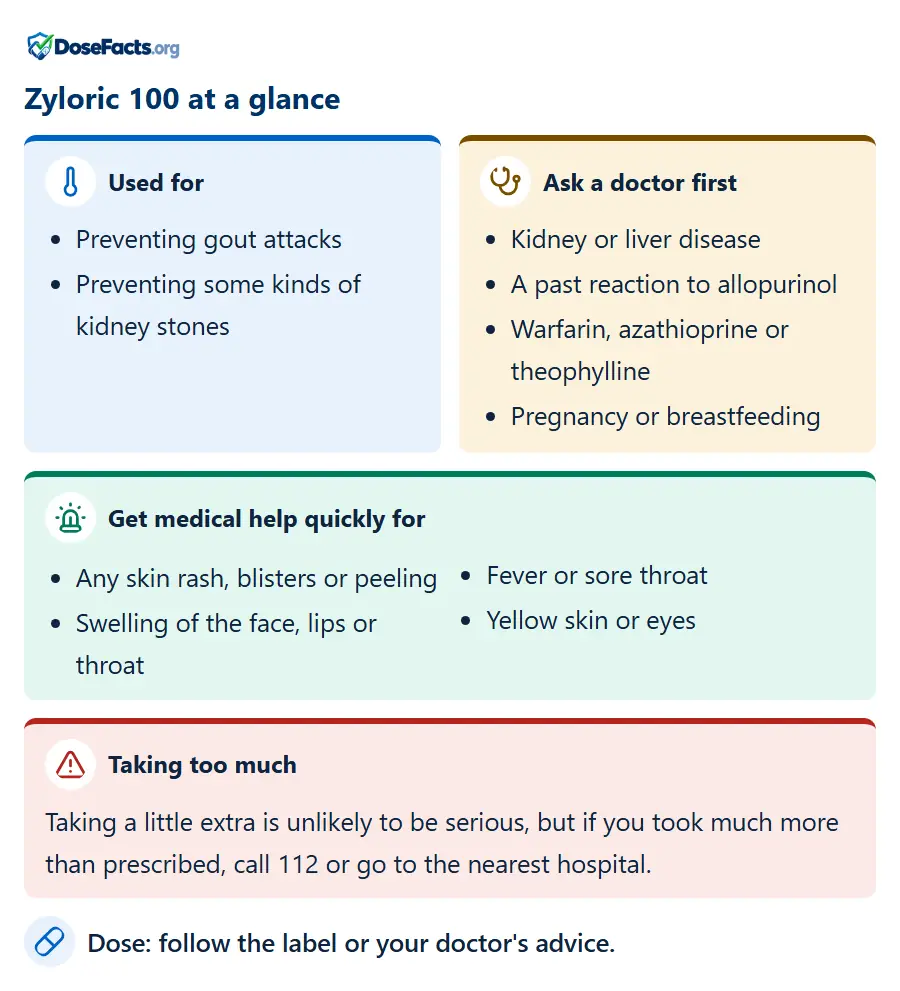
Zyloric 100 is a prescription tablet containing 100 mg of allopurinol, used to prevent gout attacks by lowering the level of uric acid in the blood. It is also used to prevent some kinds of kidney stones. It belongs to a group called xanthine oxidase inhibitors. It is taken only on a doctor's advice, usually for a long time, and a skin rash while taking it needs urgent medical advice.
- Active ingredient
- Allopurinol 100 mg
- Type of medicine
- Xanthine oxidase inhibitors
- Used for
- Gout
- Starts working in
- Uric acid begins to fall within days, but it can take months before gout attacks become less frequent
- Effect lasts
- It is taken every day as a long-term preventive medicine; follow the label or your doctor's advice
- With or without food
- Best taken with food, with plenty of fluids; follow the label or your doctor's advice
- Alcohol
- Alcohol can trigger gout attacks; ask your doctor
- Pregnancy
- Not usually used in pregnancy; a doctor may advise it if the benefit outweighs the risk
- Habit-forming
- No
- Made by
- VERIFY on pack
Pharmacist review in progress. This page is based on the sources listed below and is being checked by our registered pharmacist.
On this page
- What is Zyloric 100 used for?
- How does Zyloric 100 work?
- How to take Zyloric 100
- Side effects of Zyloric 100
- Who should be careful
- Medicines and things that interact with Zyloric 100
- If someone takes too much
- Storage
- Regulatory status in India
- Other brands with the same medicine
- Other strengths and forms
- Common questions
What is Zyloric 100 used for?
Zyloric 100 is a prescription medicine. It is used, on a doctor's advice, to prevent gout attacks and some kidney stones.
- Preventing attacks of gout by lowering uric acid in the blood
- Preventing some kinds of kidney stones made from uric acid or related substances, when a doctor judges it suitable
How does Zyloric 100 work?
Uric acid is a waste product that forms when the body breaks down substances called purines. When too much builds up in the blood, sharp crystals can form in the joints and cause gout. Allopurinol blocks an enzyme called xanthine oxidase, which the body needs to make uric acid, so less uric acid is produced.
What happens in your body after you take it
You swallow the tablet
The tablet dissolves in the gut and allopurinol is absorbed into the blood. It is best taken with food.
It travels in the blood
Allopurinol is carried around the body and is changed in the body into a related substance that also acts on the same enzyme.
It blocks the xanthine oxidase enzyme
This enzyme is the last step in making uric acid from purines. Allopurinol attaches to it and slows it down.
Uric acid levels fall
With less uric acid made, the level in the blood falls over time, and crystals in the joints can slowly dissolve. This is why attacks become less frequent after months of regular use.
The body clears it
The kidneys remove allopurinol and its related substance in the urine. People with kidney problems may need a different dose, which is why the doctor decides it.
How to take Zyloric 100
Take Zyloric 100 exactly as your doctor has prescribed or as printed on the pack. Your doctor decides the dose, which is often adjusted gradually, and how long you need it.
- It is usually taken every day, best after food, with plenty of water. Follow the label or your doctor's advice.
- Gout attacks can happen more often when you first start it. Do not stop on your own; ask your doctor what to do during an attack.
- If you miss a dose, take it when you remember. If it is almost time for the next dose, skip the missed one. Do not take two doses together.
- Your doctor may ask for blood tests from time to time to check uric acid, kidney and liver function.
- Keep taking it even when you have no pain, because it works by prevention.
Side effects of Zyloric 100
Most people take allopurinol without serious problems. Some side effects are mild, but a skin rash or allergic reaction needs urgent attention.
Uncommon or mild
- Skin rash (stop and contact your doctor straight away, see below)
- Feeling sick (nausea) or vomiting
- Diarrhoea
- More gout attacks in the first weeks or months of treatment
Rare but serious: get medical help
- A skin rash, especially with blisters, peeling, mouth sores, red or sore eyes, or fever. This can be a severe reaction. Stop the medicine and get medical help immediately
- Swelling of the face, lips, tongue or throat, or difficulty breathing (a severe allergic reaction). Get medical help immediately
- Fever, sore throat, frequent infections or unusual bruising (possible blood count changes)
- Yellow skin or eyes, dark urine or severe stomach pain (possible liver problems)
- Severe headache, stiff neck and sensitivity to light (possible meningitis)
Who should be careful
Some people need to check with a doctor before taking Zyloric 100, or need extra care while taking it.
When the label says not to use it
- Allergy to allopurinol or any ingredient of the tablet
- A past serious skin reaction to allopurinol
- Any skin rash: stop the medicine and contact a doctor straight away. Allopurinol can cause severe skin reactions, and these are more likely in people of some ancestries, including Indian origin
- A past serious reaction to allopurinol: it should not be taken again
- Kidney disease or liver disease: the dose may need to be changed
- Thyroid problems
- Pregnancy: it is not usually used in pregnancy; tell your doctor if you are pregnant or planning a baby
- Breastfeeding: it passes into breast milk; evidence is limited, so ask your doctor
- Drink plenty of fluids while taking it
- Surgery or dental work: tell the doctor or dentist that you take it
Medicines and things that interact with Zyloric 100
Zyloric 100 can change how other medicines work, and some medicines change its effect. Tell your doctor or pharmacist about everything you take, including herbal remedies and medicines bought over the counter.
- Warfarin and other blood thinners: their effect may change, so blood tests may be needed
- Azathioprine and mercaptopurine: allopurinol raises their levels, and the doctor may need to change their doses
- Theophylline: its level in the blood may rise
- Aspirin, ACE inhibitors and water tablets (diuretics): may interact; ask your doctor
- Amoxicillin and similar antibiotics: a skin rash may be more likely
- Alcohol: can trigger gout attacks
If someone takes too much
A little extra is unlikely to cause problems, but taking much more than prescribed can cause sickness, dizziness and diarrhoea. If someone has taken more than prescribed, speak to a pharmacist or doctor at once, or call 112 or go to the nearest hospital, and take the medicine pack with you.
Storage
Store below 30 C in a dry place, protected from light and moisture, in the original strip, and out of the reach of children. Do not use after the expiry date. Check the pack for the exact storage instructions.
Regulatory status in India
Approved for sale in India as a prescription medicine. Single-ingredient allopurinol is not known to be on the CDSCO list of medicines banned under section 26A of the Drugs and Cosmetics Act. Zyloric 100 contains allopurinol only.
Other brands with the same medicine
Allopurinol 100 mg tablets are sold under other brand names and as generic medicines. They contain the same medicine; check the label for the strength. Allopurinol is also made in other strengths, so do not switch products without asking your doctor.
Other strengths and forms
Allopurinol is sold in other strengths. The strength is printed on the pack and is not the same across products, so check the label of the one you have.
Common questions
Is Zyloric 100 a prescription medicine?
Yes. Allopurinol is a prescription medicine in India. It should be taken only if a doctor has prescribed it, and it should not be started, stopped or changed without the doctor's advice. Keep taking it as directed even when you have no pain.
What is Zyloric 100 used for?
It is used to prevent gout attacks by lowering uric acid in the blood, and in some people to prevent kidney stones. It does not treat the pain of an attack. Ask your doctor what to do if you have an attack.
Why did my gout get worse when I started Zyloric 100?
Attacks can happen more often in the first weeks or months, as uric acid levels change. This does not mean the medicine is failing. Do not stop on your own; tell your doctor, who may add other medicine to help prevent attacks.
What should I do if I get a rash on Zyloric 100?
Stop the tablet and contact a doctor straight away. A rash can be an early sign of a severe skin reaction, especially if there are blisters, peeling, mouth sores or fever. Get urgent medical help if these appear.
Can I take Zyloric 100 with food?
It is best taken with food and plenty of water. Doctors usually advise taking it at about the same time every day. Follow the label or your doctor's advice.
Can I drink alcohol while taking Zyloric 100?
Alcohol, especially beer, can trigger gout attacks and work against the treatment. Ask your doctor what is reasonable for you.
What is the difference between Zyloric 100 and allopurinol 100 mg?
Zyloric is a brand name, and allopurinol is the medicine inside it. Generic allopurinol 100 mg tablets contain the same active ingredient. Check the strength and ingredient list on the pack, and ask your doctor before switching.
Sources
- Allopurinol: a medicine to prevent gout and kidney stones. NHS (UK)
- Gout. NHS (UK)
- ATC/DDD Index: M04AA Preparations inhibiting uric acid production. WHO Collaborating Centre for Drug Statistics Methodology