
Oseltamivir: Uses, How It Works, Medicines
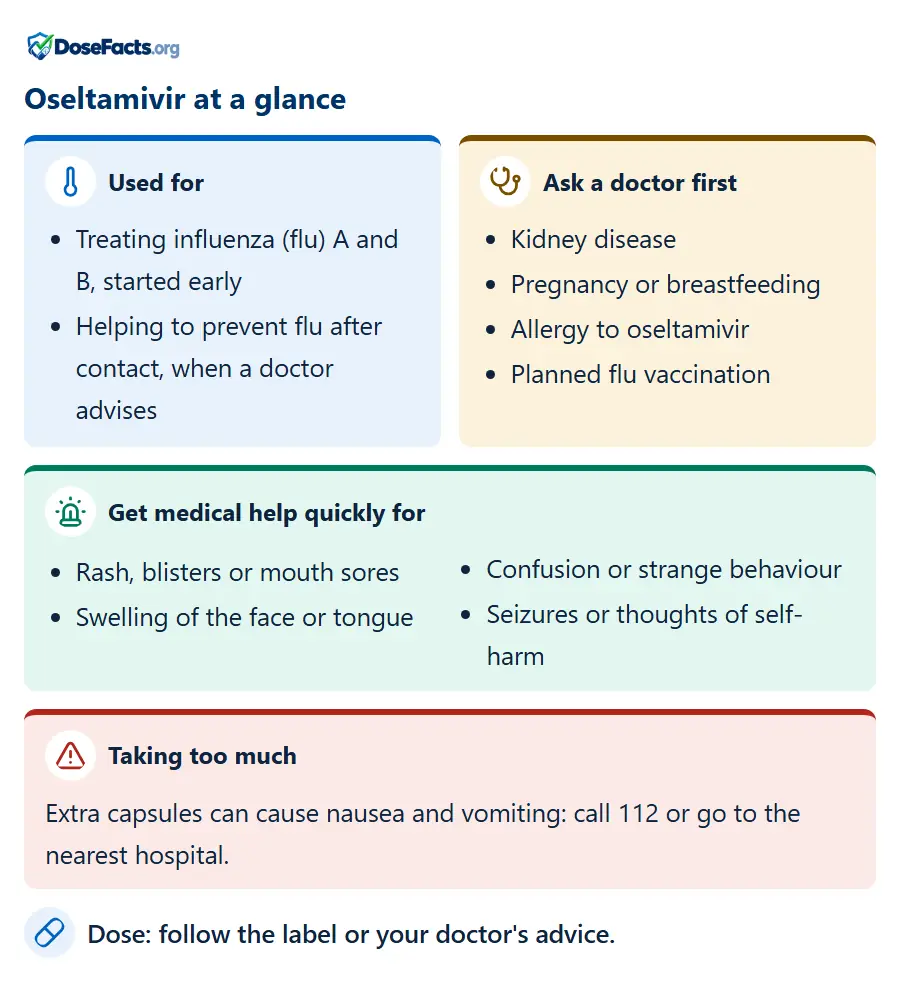
Oseltamivir is a prescription antiviral used to treat influenza (flu). In some people who have been in contact with a flu case, it helps prevent flu. It works best when started within two days of the first symptoms. It belongs to the antivirals, does not treat colds or replace the yearly flu vaccine, and antibiotics do not work against flu.
Also known as: Oseltamivir capsule, Oseltamivir 75 mg, Tamiflu, Fluvir
Pharmacist review in progress. This page is based on the sources listed below and is being checked by our registered pharmacist.
How does Oseltamivir work?
Flu viruses use an enzyme called neuraminidase to break free from an infected cell and spread. Oseltamivir blocks this enzyme in influenza A and B viruses, so the virus spreads less and the illness is usually shorter.
How to take Oseltamivir
Follow the label or your doctor's advice. Oseltamivir is usually taken twice a day for treatment, with food to reduce stomach upset. Your doctor decides the dose and how many days you need it, which differs for children and for people with kidney problems.
Side effects of Oseltamivir
Most people take oseltamivir without serious problems. Some side effects are common and mild, but a few need medical help.
Uncommon or mild
- Nausea and headache in adults
- Vomiting, cough and a blocked nose in children
- Stomach upset, which is less likely with food
Rare but serious: get medical help
- Rash, blisters, mouth sores or swelling of the face or tongue (a severe allergic or skin reaction). Get medical help immediately
- Confusion, agitation, hallucinations, seizures or thoughts of self-harm (mainly reported in children and teenagers with flu)
Who should be careful
Some people need to check with a doctor before taking oseltamivir, or need extra care while taking it.
When the label says not to use it
- Allergy to oseltamivir or any ingredient of the capsule
- Allergy to oseltamivir
- Kidney disease: the dose may need to change
- Pregnancy or breastfeeding: tell your doctor
- Children and teenagers with flu: carers should watch for confusion or unusual behaviour
- Live nasal spray flu vaccine: oseltamivir can affect it
Medicines and things that interact with Oseltamivir
Oseltamivir may interact with other medicines or vaccines. Tell your doctor or pharmacist about everything you take.
- Live nasal spray flu vaccine
- Other prescription, over-the-counter and herbal products: tell your doctor
If someone takes too much
Extra capsules can cause nausea and vomiting. If someone has taken much more than prescribed, call 112 or go to the nearest hospital.
Regulatory status in India
Approved for sale in India as a prescription medicine. Single-ingredient oseltamivir is not on the CDSCO list of medicines banned under section 26A of the Drugs and Cosmetics Act. Check the schedule printed on the pack.
Type of medicine
Oseltamivir belongs to this type of medicine.
Medicines that contain Oseltamivir
These medicines sold in India contain Oseltamivir. They are listed A to Z, not ranked.
- Fluvir 75 · 75 mg capsule
What is Oseltamivir used for?
Medicines that contain Oseltamivir are used for these conditions.
Other medicines of the same type
These active ingredients are of the same type as Oseltamivir.
Common questions
What is oseltamivir used for?
Oseltamivir is an antiviral used on a doctor's advice to treat influenza A and B and, in some people who have been in contact with flu, to help prevent it. It does not treat colds.
How soon should oseltamivir be started?
As early as possible, ideally within two days of the first flu symptoms. See a doctor promptly and follow the course given. Starting late may give less benefit.
Does oseltamivir replace the flu vaccine?
No. Oseltamivir is not a substitute for the yearly flu vaccine. The vaccine helps prevent flu, while the medicine is used for early treatment or prevention after contact. Ask your doctor about vaccination.
Sources
- Tamiflu (oseltamivir): EPAR medicine overview. European Medicines Agency
- Oseltamivir. MedlinePlus, US National Library of Medicine
- Influenza antiviral medications: summary for clinicians. Centers for Disease Control and Prevention (US)
- ATC/DDD Index: J05AH02. WHO Collaborating Centre for Drug Statistics Methodology
- List of drugs prohibited for manufacture and sale through gazette notifications under section 26A of the Drugs & Cosmetics Act 1940. Central Drugs Standard Control Organisation (CDSCO)