
Sucralfate: Uses, How It Works, Medicines
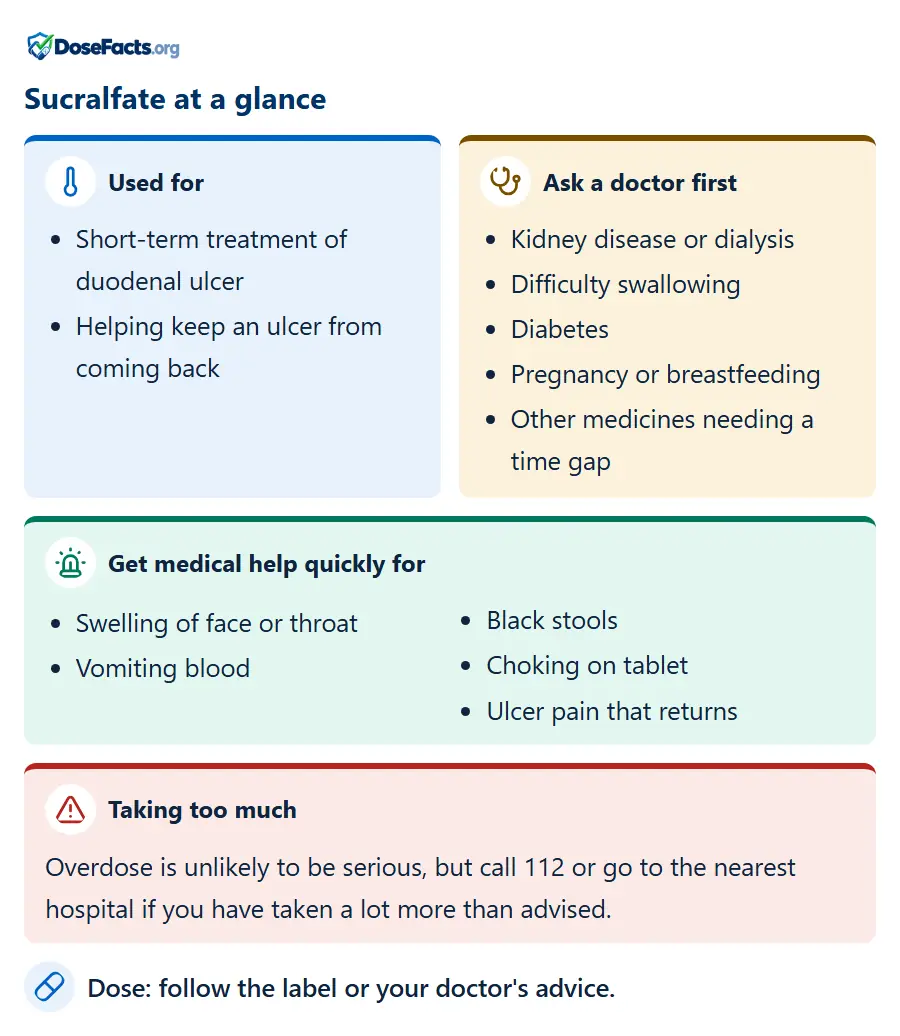
Sucralfate is a prescription medicine that coats an ulcer to protect it from stomach acid while it heals. It is used for short-term treatment of duodenal ulcers and, at a lower dose, to help keep them from coming back. It is taken on an empty stomach and must be spaced from many other medicines. Constipation is the most common side effect.
Also known as: Sucralfate tablets, Sucralfate 1 g, Aluminium sucrose sulfate
Pharmacist review in progress. This page is based on the sources listed below and is being checked by our registered pharmacist.
How does Sucralfate work?
In the acid of the stomach, sucralfate turns into a sticky paste that sticks to an ulcer. This layer protects the sore spot from acid, pepsin and bile salts so the lining can heal. It acts on the surface and very little is absorbed.
How to take Sucralfate
Follow the label or your doctor's advice. The label says to take it on an empty stomach. Do not take antacids within 30 minutes before or after it unless your doctor advises.
Side effects of Sucralfate
Sucralfate is generally well tolerated, and side effects are usually mild.
Uncommon or mild
- Constipation
- Diarrhoea or nausea
- Dizziness or headache
- Rash
Rare but serious: get medical help
- Swelling of the face, lips, tongue or throat, wheeze or difficulty breathing (an allergic reaction). Get medical help immediately
- Difficulty swallowing the tablet or choking
- Vomiting blood, or black stools
Who should be careful
Some people need to check with a doctor before taking sucralfate, or need extra care while taking it.
When the label says not to use it
- Allergy to sucralfate or any ingredient
- Kidney disease or dialysis: small amounts of aluminium are absorbed and can build up
- Difficulty swallowing, or a history of choking on tablets
- Diabetes: ask your doctor about blood sugar
- Slow stomach emptying
- Pregnancy and breastfeeding: talk to your doctor before use
- Ulcer pain that keeps coming back, black stools or vomiting blood needs a doctor
Medicines and things that interact with Sucralfate
Sucralfate can lower how much of other medicines the body absorbs. Tell your doctor or pharmacist about everything you take, and ask about timing.
- Antibiotics such as ciprofloxacin and tetracyclines, levothyroxine, digoxin, phenytoin, theophylline and ketoconazole: absorption can fall, so they are usually taken about 2 hours apart
- Warfarin: blood clotting may need checking
- Antacids: do not take within 30 minutes before or after sucralfate unless your doctor advises
If someone takes too much
Very little sucralfate is absorbed, so an overdose is unlikely to be serious, but it can cause indigestion, stomach pain, nausea and vomiting. If someone has taken a lot more than advised, call 112 or go to the nearest hospital and take the pack with you.
Regulatory status in India
Approved for sale in India. The schedule should be confirmed on the pack. Check the ingredient list on the pack, since some products combine sucralfate with other medicines.
Type of medicine
Sucralfate belongs to this type of medicine.
Medicines that contain Sucralfate
These medicines sold in India contain Sucralfate. They are listed A to Z, not ranked.
- Sucrafil 1g · 1 g tablet
What is Sucralfate used for?
Medicines that contain Sucralfate are used for these conditions.
Common questions
What is sucralfate used for?
The label uses it for short-term treatment of an active duodenal ulcer and, at a lower dose, to help keep an ulcer from coming back. A doctor decides whether it suits you and for how long.
When should I take sucralfate?
The label says to take it on an empty stomach. Follow the label or your doctor's advice on timing, and keep a gap from other medicines.
Why must I leave a gap between sucralfate and other medicines?
It can lower how much of some medicines the body absorbs, including some antibiotics and thyroid tablets. Doctors usually advise about 2 hours. Ask your pharmacist about each medicine you take.
Is Sucrafil 1g the same as sucralfate?
Sucrafil is a brand name for medicines containing sucralfate. Check the strength and form on the pack before switching products.
Sources
- Carafate (sucralfate) tablets: prescribing information. DailyMed, US National Library of Medicine
- Stomach ulcer. NHS (UK)