
Colchicine: Uses, How It Works, Medicines
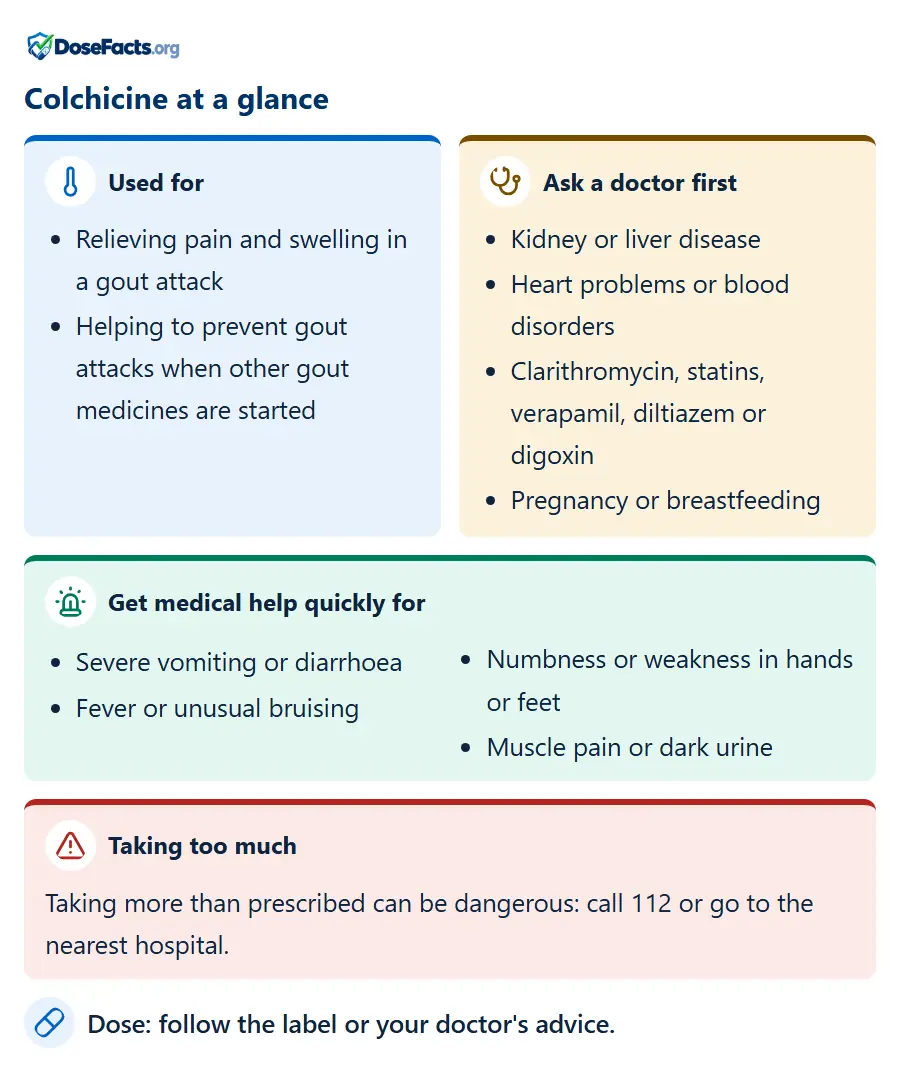
Colchicine is a prescription medicine used to relieve the pain and swelling of a gout attack. It is also used in some people to help prevent attacks when other gout medicines are started. Taking more than prescribed can be dangerous. It should only be started or stopped on a doctor's advice.
Also known as: Colchicine tablet, Colchicine 0.5 mg, Colcin
Pharmacist review in progress. This page is based on the sources listed below and is being checked by our registered pharmacist.
How does Colchicine work?
Colchicine calms the white blood cells that gather around uric acid crystals in a joint, so there is less swelling and pain. It does not lower the level of uric acid in the blood.
How to take Colchicine
Follow the label or your doctor's advice. Do not take doses closer together than prescribed, because colchicine can build up to dangerous levels.
Side effects of Colchicine
Most people take colchicine without serious problems. Some side effects are mild, but a few need medical help.
Uncommon or mild
- Stomach pain
- Feeling sick or vomiting
- Diarrhoea
Rare but serious: get medical help
- Severe or lasting vomiting, stomach pain or diarrhoea (possible toxicity). Contact a doctor straight away
- Fever, unusual bruising or bleeding
- Numbness, tingling or weakness in hands or feet
- Muscle pain or weakness, or dark urine
- Swelling of the face, lips or throat, or difficulty breathing. Get medical help immediately
Who should be careful
Some people need to check with a doctor before taking colchicine, or need extra care while taking it.
When the label says not to use it
- Allergy to colchicine or any ingredient of the tablet
- Taking more than the prescribed amount
- Kidney disease or dialysis, liver disease, heart problems or blood disorders
- Digestive conditions such as stomach ulcer, Crohn's disease, ulcerative colitis or coeliac disease
- Pregnancy: it can be used if needed after the doctor weighs risks and benefits
- Breastfeeding: ask a doctor or pharmacist first
- Avoid driving if you feel drowsy or dizzy
Medicines and things that interact with Colchicine
Tell your doctor or pharmacist about everything you take, including herbal remedies and medicines bought over the counter.
- Some antibiotics such as clarithromycin and erythromycin: can raise colchicine to dangerous levels
- Statins: the risk of muscle problems may rise
- Verapamil, diltiazem, digoxin, ciclosporin, cimetidine and ritonavir: may interact
- Grapefruit juice: avoid it
If someone takes too much
Taking more than prescribed is dangerous and can cause severe vomiting and diarrhoea and damage to blood, muscles, nerves and kidneys. Call 112 or go to the nearest hospital at once and take the pack with you; do not wait for symptoms.
Regulatory status in India
Approved for sale in India as a prescription medicine. Single-ingredient colchicine is not known to be on the CDSCO list of medicines banned under section 26A of the Drugs and Cosmetics Act. Fixed-dose combinations that contain colchicine with other medicines may be treated differently, so check the ingredient list on the pack.
Type of medicine
Colchicine belongs to this type of medicine.
Medicines that contain Colchicine
These medicines sold in India contain Colchicine. They are listed A to Z, not ranked.
- Colcin · 0.5 mg tablet
What is Colchicine used for?
Medicines that contain Colchicine are used for these conditions.
Common questions
What is colchicine used for?
It is used to relieve the pain and swelling of a gout attack and, in some people, to help prevent attacks when other gout medicines are started. It does not lower uric acid. A doctor decides whether it suits you.
Is it safe to take extra colchicine for a bad attack?
No. Taking more than prescribed or doses closer together can cause serious poisoning. Contact your doctor if the pain is not controlled.
Why does colchicine cause stomach upset?
Nausea, stomach pain and diarrhoea are common and can be an early sign that too much is in the body. Contact your doctor promptly if they are severe or do not settle.
Can I drink grapefruit juice with colchicine?
No. Grapefruit juice can raise the level of colchicine in the blood to harmful amounts. Some antibiotics, heart medicines and statins have a similar effect, so tell your doctor everything you take.
Is Colcin the same as colchicine?
Colcin is a brand name. The tablet contains colchicine. Check the ingredient list and strength on the pack, and ask your doctor before switching products.
Sources
- Colchicine: a medicine to treat gout. NHS (UK)
- Gout. NHS (UK)
- ATC/DDD Index: M04AC01 colchicine. WHO Collaborating Centre for Drug Statistics Methodology