
Ibuprofen: Uses, How It Works, Medicines
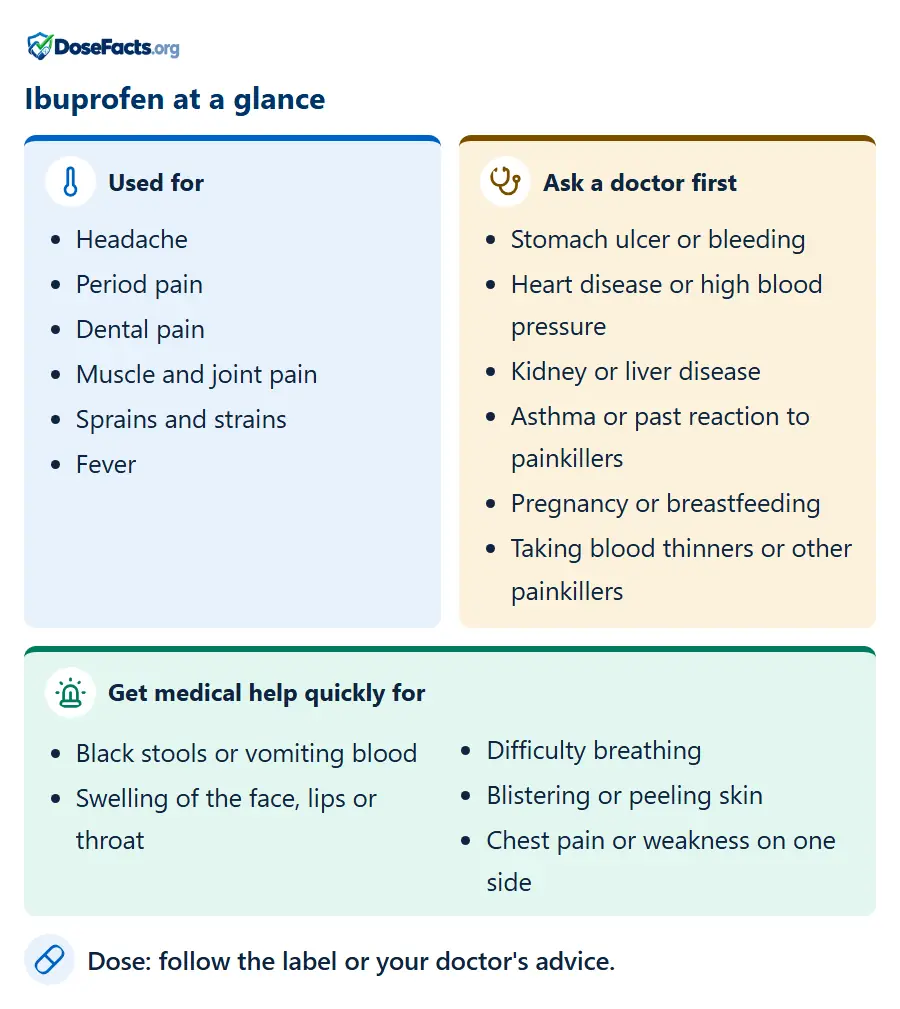
Ibuprofen is a painkiller of the NSAID type used to relieve mild to moderate pain, swelling and fever. It is used for headache, period pain, dental pain, muscle and joint pain, sprains and fever. It can irritate the stomach and raise the risk of heart, kidney and bleeding problems, so it should be used at the lowest dose for the shortest time. In India it is sold on its own and in a combination with paracetamol.
Also known as: Ibuprofen tablet, Ibuprofen 200 mg, Ibuprofen 400 mg, Ibuprofen 600 mg, Ibuprofen IP, Ibuprophen, Ibuprofin, Brufen, Ibugesic
Pharmacist review in progress. This page is based on the sources listed below and is being checked by our registered pharmacist.
How does Ibuprofen work?
Ibuprofen blocks enzymes called COX-1 and COX-2, which lowers prostaglandins, the chemical messengers that cause pain, swelling and fever. The same blocking in the stomach lining and kidneys explains many of its side effects.
How to take Ibuprofen
Follow the label or your doctor's advice. Ibuprofen is usually taken with or after food, at the lowest dose for the shortest time needed, and doses for children depend on weight and age, so only a doctor or pharmacist should decide those.
Side effects of Ibuprofen
Ibuprofen is generally well tolerated for short periods. Stomach upset is the most common problem, and serious effects are less common.
Uncommon or mild
- Heartburn, indigestion or stomach pain
- Feeling sick (nausea) or vomiting
- Diarrhoea or constipation
- Headache or dizziness
- Mild skin rash
Rare but serious: get medical help
- Black or tarry stools, or vomiting blood, which can be signs of bleeding in the stomach or gut
- Signs of a severe allergic reaction: swelling of the face, lips or throat, difficulty breathing, wheezing or a sudden widespread rash
- Red skin with blisters or peeling. Stop the medicine and get medical help immediately
- Chest pain, shortness of breath, weakness on one side or slurred speech
- Swelling of the ankles, passing much less urine or sudden weight gain, which can be signs of kidney problems
Who should be careful
Because ibuprofen is an NSAID, several groups of people need to check with a doctor before taking it.
When the label says not to use it
- Allergy to ibuprofen, aspirin or other NSAIDs, including asthma, hives or swelling after taking them
- Active stomach or gut ulcer or bleeding, or a history of repeated ulcers or bleeding
- Severe heart, kidney or liver failure
- The last 3 months of pregnancy
- A past stomach or gut ulcer or bleeding, or ulcerative colitis or Crohn's disease
- Heart disease, heart failure, high blood pressure, or a past heart attack or stroke
- Kidney or liver disease, or being dehydrated
- Asthma, hay fever or nasal polyps, or a past reaction to aspirin or another painkiller
- Pregnancy: ask a doctor first; it is not for the last 3 months, and it should not be used in the first two trimesters unless a doctor says it is clearly needed
- Breastfeeding: ask a doctor or pharmacist
- Older adults, who are more likely to have stomach bleeding and kidney effects
- Taking blood thinners, steroids or other painkillers
Medicines and things that interact with Ibuprofen
Several medicines add to the stomach, kidney or bleeding risks of ibuprofen. Tell your doctor or pharmacist about everything you take.
- Other NSAID painkillers, including aspirin and diclofenac: more stomach, kidney and bleeding risk
- Blood thinners such as warfarin, and antiplatelet medicines: higher bleeding risk
- Steroid tablets and SSRI-type antidepressants: higher risk of stomach bleeding
- Water tablets (diuretics), ACE inhibitors and similar blood-pressure medicines: can affect the kidneys and reduce their effect
- Methotrexate and lithium: levels may rise
- Alcohol: raises the risk of stomach irritation
Regulatory status in India
Approved for sale in India as tablets, suspensions and gels. Single-ingredient ibuprofen is not on the CDSCO list of banned medicines. Some fixed-dose combinations containing ibuprofen have been banned, while ibuprofen 400 mg with paracetamol 325 mg is on CDSCO's approved list. Check the ingredient list and the schedule printed on the pack.
Type of medicine
Ibuprofen belongs to this type of medicine.
Medicines that contain Ibuprofen
These medicines sold in India contain Ibuprofen. They are listed A to Z, not ranked.
- Combiflam · 400 mg tablet
What is Ibuprofen used for?
Combination medicines that contain Ibuprofen are used for these conditions.
Other medicines of the same type
These active ingredients are of the same type as Ibuprofen.
Common questions
What is ibuprofen used for?
Ibuprofen is used to relieve mild to moderate pain and swelling, such as headache, period pain, dental pain, muscle and joint pain and sprains, and to bring down fever. It eases symptoms but does not treat the cause.
Should ibuprofen be taken with food?
Usually yes. Taking it with or after food can lessen stomach upset. Food may make it start working a little later. Stop and get help if you notice black stools, vomiting blood or severe stomach pain.
Can I take ibuprofen with paracetamol?
They are different kinds of painkiller and are sometimes combined, for example in Combiflam. Do not add a second paracetamol or NSAID product on top of a combination tablet. Check labels, and ask a pharmacist if you are unsure.
Who should avoid ibuprofen?
People with a stomach ulcer or past bleeding, severe heart, kidney or liver failure, or asthma or an allergic reaction after aspirin or other painkillers should avoid it. It is also not for the last 3 months of pregnancy. Ask a doctor if unsure.
Can ibuprofen affect the heart or kidneys?
Yes. NSAIDs can raise blood pressure, hold fluid and strain the kidneys, and at high doses ibuprofen is linked to a small increase in heart attack and stroke risk. Use the lowest dose for the shortest time and ask a doctor if you have heart or kidney disease.
Is ibuprofen safe in dengue?
Doctors usually advise against it. NSAIDs such as ibuprofen can increase the risk of bleeding, so paracetamol is generally used for fever and pain in dengue. Dengue needs a doctor's care.
Sources
- Ibuprofen for adults. NHS (UK)
- Combiflam Tablets: Package insert (Ibuprofen and Paracetamol Tablets I.P., updated January 2026). Sanofi India (Sanofi Consumer Healthcare India Limited)
- Ibuprofen. StatPearls, National Center for Biotechnology Information (NCBI), US National Library of Medicine
- ATC/DDD Index: M01AE01 ibuprofen. WHO Collaborating Centre for Drug Statistics Methodology
- List of drugs prohibited for manufacture and sale through gazette notifications under section 26A of the Drugs & Cosmetics Act 1940. Central Drugs Standard Control Organisation (CDSCO)