
Combiflam: Uses, How It Works, Side Effects
Also known as: Combiflam tablet, Combiflam tablets, Combiflam 400 325, Ibuprofen and paracetamol tablets, Ibuprofen 400 mg paracetamol 325 mg, Ibuprofen paracetamol tablet, Combiflam ibuprofen
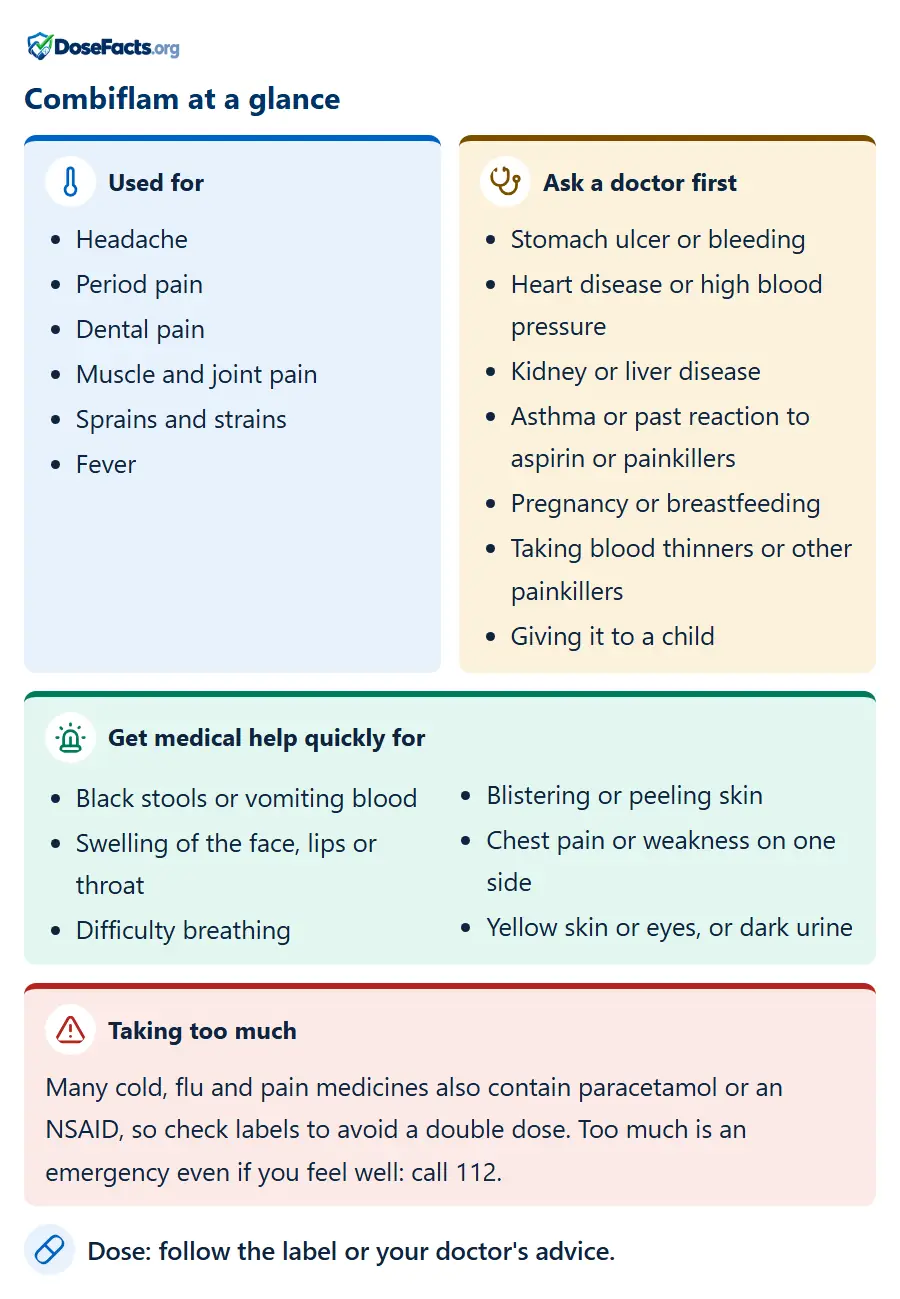
Combiflam is a tablet that contains 400 mg of ibuprofen and 325 mg of paracetamol. It is used for short-term relief of mild to moderate pain and inflammation, such as headache, period pain, dental pain, sprains and strains, and joint and muscle pain, and it also reduces fever. Ibuprofen is a painkiller of the NSAID type, so it carries stomach, heart and kidney cautions. It eases symptoms but does not treat the cause.
- Active ingredient
- Ibuprofen 400 mg + Paracetamol 325 mg
- Type of medicine
- Non-steroidal anti-inflammatory drugs (NSAIDs), Non-opioid analgesics
- Used for
- Fever, Headache, Joint pain and arthritis, Period pain
- Starts working in
- About 30 to 60 minutes
- Effect lasts
- About 4 to 6 hours
- With or without food
- With food if your stomach is sensitive
- Alcohol
- Avoid
- Pregnancy
- Ask your doctor; not for the last 3 months
- Habit-forming
- No
- Made by
- VERIFY on pack
Pharmacist review in progress. This page is based on the sources listed below and is being checked by our registered pharmacist.
On this page
- What is Combiflam used for?
- How does Combiflam work?
- How to take Combiflam
- Side effects of Combiflam
- Who should be careful
- Medicines and things that interact with Combiflam
- If someone takes too much
- Storage
- Regulatory status in India
- Other brands with the same medicine
- Other strengths and forms
- Common questions
What is Combiflam used for?
Combiflam is used for short-term relief of mild to moderate pain and inflammation, and to reduce fever.
- Headache, including migraine headache
- Period pain
- Dental pain
- Pain after an operation
- Muscle and joint pain
- Sprains and strains
- Fever
How does Combiflam work?
Ibuprofen blocks enzymes called COX-1 and COX-2, which lowers prostaglandins, the chemical messengers that cause pain, swelling and fever. Paracetamol works mainly in the brain and spinal cord to turn down pain signals and lower the body's temperature set-point. Together they act in two different ways.
What happens in your body after you take it
You swallow the tablet
The tablet breaks apart in the stomach and both medicines pass into the small intestine.
Absorbed into the blood
Both ibuprofen and paracetamol are absorbed quickly in the small intestine. Taking the tablet with food can make the effect start a little later.
Ibuprofen lowers prostaglandins where the body is hurt
Ibuprofen blocks COX enzymes in the body's tissues. With fewer prostaglandins, pain, swelling and heat in the area ease. The same blocking in the stomach lining and kidneys is why this type of medicine can irritate the stomach or affect the kidneys.
Paracetamol turns down pain signals in the brain
Paracetamol acts mainly in the brain and spinal cord, where it reduces prostaglandins. This dampens pain signals and brings the fever set-point back down.
The liver and kidneys clear the medicines
The liver changes most of the paracetamol and part of the ibuprofen into forms the body can remove. They leave mainly through the urine, so the effect fades after about 4 to 6 hours.
How to take Combiflam
Take Combiflam exactly as your doctor advises or as printed on the pack, and use it for the shortest time needed. Do not take more, more often or for longer than directed.
- The label for adults and for adolescents aged 12 and over weighing at least 40 kg describes one tablet at a time, with at least 6 hours between doses and no more than 3 tablets in 24 hours.
- It is meant for short-term use. The label says not to use it for more than 3 days for fever or more than 4 days for pain unless a doctor advises. See a doctor if symptoms continue or get worse.
- People with a sensitive stomach should take it with food. Swallow the tablet with water.
- Many cold, flu and pain medicines also contain paracetamol or an NSAID. Check labels so you do not double up.
- The label says Combiflam tablets are not for children under 12 years or for adolescents under 40 kg.
Side effects of Combiflam
Most people tolerate Combiflam for a short time. The most common problems are stomach upset, and the serious risks are stomach bleeding, kidney or heart problems, liver damage from too much paracetamol, and skin reactions.
Uncommon or mild
- Heartburn, indigestion or stomach pain
- Feeling sick (nausea) or vomiting
- Diarrhoea or constipation
- Headache or dizziness
- Mild skin rash
Rare but serious: get medical help
- Black or tarry stools, or vomiting blood, which can be signs of bleeding in the stomach or gut
- Signs of a severe allergic reaction: swelling of the face, lips or throat, difficulty breathing, wheezing or a sudden widespread rash
- Red skin with blisters or peeling, or sores in the mouth. Stop the medicine and get medical help immediately
- Chest pain, shortness of breath, weakness on one side or slurred speech, which can be signs of a heart attack or stroke
- Swelling of the ankles or face, passing much less urine, or sudden weight gain, which can be signs of kidney problems or fluid build-up
- Yellowing of the skin or eyes, dark urine, or pain in the upper right side of the tummy, which can be signs of liver damage
Who should be careful
Because Combiflam contains an NSAID (ibuprofen), more people need to check with a doctor before taking it than with paracetamol alone.
When the label says not to use it
Ibuprofen
- Allergy to ibuprofen, aspirin or other NSAIDs, including asthma, hives or swelling after taking them
- Active stomach or gut ulcer or bleeding, or a history of repeated ulcers or bleeding
- Severe heart, kidney or liver failure
- The last 3 months of pregnancy
Paracetamol
- Allergy to paracetamol or any ingredient of the tablet
- Already taking another medicine that contains paracetamol
- A past stomach or gut ulcer or bleeding, or ulcerative colitis or Crohn's disease
- Heart disease, heart failure, high blood pressure, or a past heart attack or stroke
- Kidney disease, or being dehydrated from vomiting or diarrhoea
- Liver disease, heavy or regular drinking, or poor nutrition
- Asthma, hay fever or nasal polyps, especially if aspirin or another painkiller has caused wheezing or a rash before
- Lupus or related conditions
- Pregnancy or breastfeeding: ask a doctor first; it is not for the last 3 months of pregnancy
- Older adults, who are more likely to have stomach bleeding and kidney effects
- Taking blood thinners, steroids or other painkillers, or having surgery soon
- Children under 12 and adolescents under 40 kg: not for these groups
Medicines and things that interact with Combiflam
Several medicines add to the stomach, kidney or bleeding risks of ibuprofen, or double up the paracetamol. Tell your doctor or pharmacist about everything you take.
- Other painkillers of the NSAID type, including aspirin and diclofenac: more stomach, kidney and bleeding risk, so taking two together is avoided
- Other medicines containing paracetamol, including many cold and flu products: risk of overdose
- Blood thinners such as warfarin, and antiplatelet medicines: higher bleeding risk
- Steroid tablets and SSRI-type antidepressants: higher risk of stomach bleeding
- Water tablets (diuretics), ACE inhibitors and similar blood-pressure medicines: can affect the kidneys and reduce their effect
- Methotrexate and lithium: levels may rise
- Alcohol: raises the risk of stomach irritation and, with paracetamol, liver damage
If someone takes too much
Taking too much paracetamol is a medical emergency even if the person feels well, because serious liver damage can develop over the next 1 to 3 days. Too much ibuprofen can also cause stomach pain, vomiting, drowsiness and kidney problems. Call 112 or go to the nearest hospital immediately and take the pack with you.
Storage
Store as directed on the pack, usually in a cool, dry place away from direct sunlight and out of the reach of children. Do not use after the expiry date.
Regulatory status in India
Approved for sale in India. The ibuprofen 400 mg + paracetamol 325 mg combination appears on CDSCO's list of approved fixed-dose combinations. Combinations that pair paracetamol or ibuprofen with other medicines have been banned in India, so check that the pack lists only ibuprofen and paracetamol.
Other brands with the same medicine
Other brands and generic tablets that contain ibuprofen 400 mg with paracetamol 325 mg work the same way. Check the ingredients and strength printed on the pack, because some products with similar names contain different amounts or other ingredients.
Other strengths and forms
Combiflam is also sold as a suspension for children and in other variants, so check the pack to be sure which strength and ingredients you have. Dosing for the suspension is by body weight, as a doctor advises.
Common questions
What is Combiflam used for?
Combiflam is used for short-term relief of mild to moderate pain and inflammation, such as headache, period pain, dental pain, sprains and strains, and muscle and joint pain, and it also reduces fever. It eases the symptoms but does not treat their cause.
Can I take Combiflam on an empty stomach?
It is better not to if your stomach is sensitive. The label advises taking it with food, because the ibuprofen in it can irritate the stomach lining. Food may make it start working a little later. Stop and get help if you notice black stools or stomach pain.
How long can I take Combiflam?
Only for a short time. The label says not to use it for more than 3 days for fever or more than 4 days for pain unless a doctor advises it. If symptoms continue or get worse, see a doctor instead of taking more.
Can I take Combiflam with paracetamol or Dolo?
No, not unless a doctor tells you to. Combiflam already contains 325 mg of paracetamol, so adding paracetamol, Dolo, Crocin or a cold and flu medicine with paracetamol can lead to an overdose and liver damage. Check every label.
Is Combiflam an antibiotic?
No. It contains ibuprofen and paracetamol, which relieve pain, swelling and fever. It does not kill bacteria or viruses and does not treat the infection behind a fever.
Who should avoid Combiflam?
People who have had a stomach ulcer or bleeding, severe heart, kidney or liver failure, or an allergic reaction or asthma after aspirin or another painkiller should not take it. It is also not for the last 3 months of pregnancy or for children under 12. Ask a doctor if unsure.
Can I take Combiflam with alcohol?
It is best to avoid alcohol. Alcohol adds to the stomach irritation caused by ibuprofen and, with regular heavy drinking, raises the risk of liver damage from paracetamol.
Is Combiflam safe in pregnancy?
Ask your doctor first. The label says it must not be used in the last 3 months of pregnancy, and the ibuprofen in it should not be used in the first two trimesters unless a doctor says it is clearly needed. Do not self-medicate during pregnancy.
Can children take Combiflam?
Combiflam tablets are not for children under 12 years or for adolescents under 40 kg, because the tablet has a high amount of each medicine. For children, a doctor will choose a suitable product and a dose based on weight.
Can I take Combiflam for fever in dengue?
No, not without a doctor's advice. NSAIDs such as ibuprofen can increase the risk of bleeding, so doctors usually advise paracetamol alone for fever in dengue. Dengue needs a doctor's care.
Is Combiflam habit-forming?
No. Ibuprofen and paracetamol are not opioids and do not cause dependence. They should still be used only for a short time and only as directed.
Sources
- Combiflam Tablets: Package insert (Ibuprofen and Paracetamol Tablets I.P., updated January 2026). Sanofi India (Sanofi Consumer Healthcare India Limited)
- Ibuprofen for adults. NHS (UK)
- Ibuprofen. StatPearls, National Center for Biotechnology Information (NCBI), US National Library of Medicine
- Acetaminophen. StatPearls, National Center for Biotechnology Information (NCBI), US National Library of Medicine
- Approved fixed-dose combinations (list of FDCs approved by DCGI). Central Drugs Standard Control Organisation (CDSCO)
- List of drugs prohibited for manufacture and sale through gazette notifications under section 26A of the Drugs & Cosmetics Act 1940. Central Drugs Standard Control Organisation (CDSCO)