
Metoprolol: Uses, How It Works, Medicines
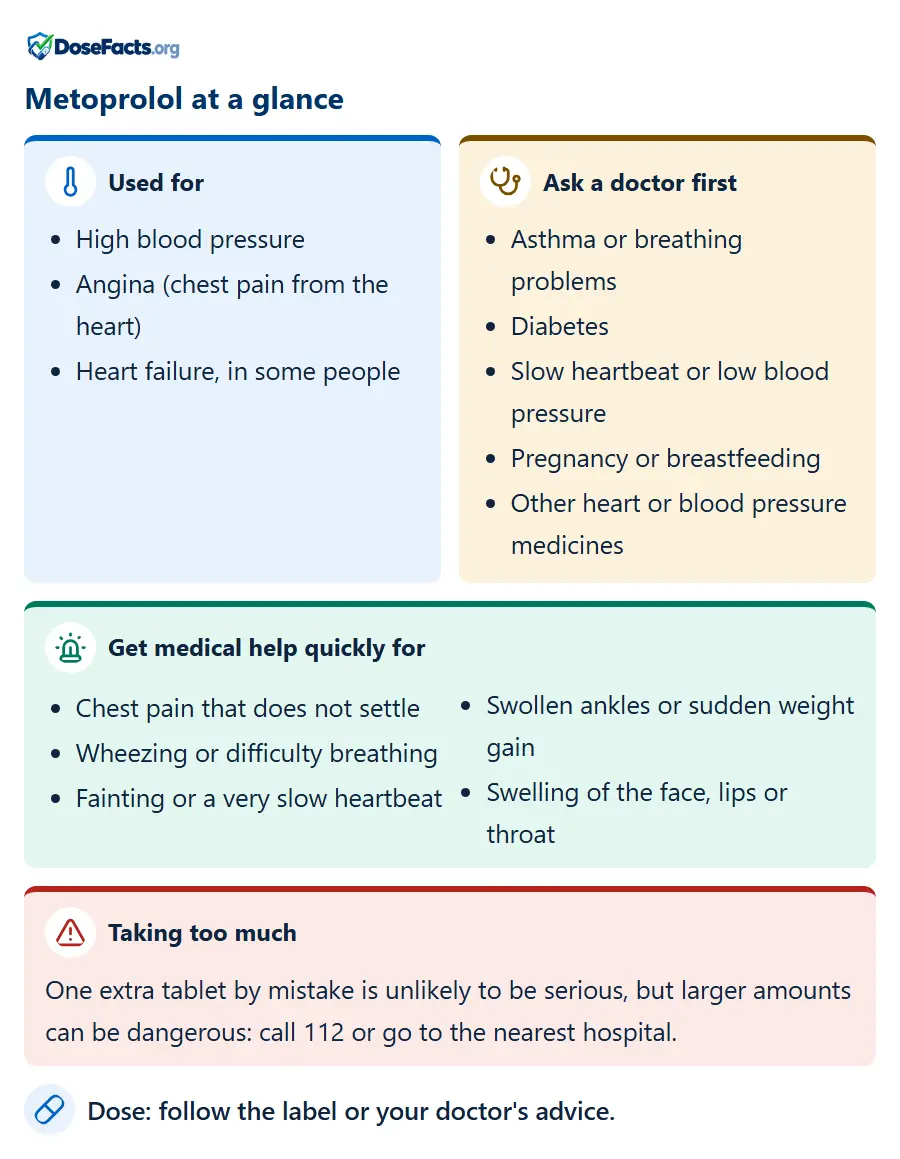
Metoprolol is a prescription beta blocker that slows the heart and lowers blood pressure. It is used to treat high blood pressure and angina and, in the extended-release form, some people with heart failure. It must not be stopped suddenly and should only be started or stopped on a doctor's advice.
Also known as: Metoprolol succinate, Metoprolol tartrate, Metoprolol 25 mg, Metoprolol 50 mg, Metoprolol ER, Metolar, Lopressor, Toprol-XL
Pharmacist review in progress. This page is based on the sources listed below and is being checked by our registered pharmacist.
How does Metoprolol work?
Metoprolol selectively blocks beta-1 receptors in the heart, so adrenaline has less effect on it. The heart beats more slowly and with less force, which lowers blood pressure and the heart's workload.
How to take Metoprolol
Follow the label or your doctor's advice. The extended-release form is usually taken once a day and swallowed whole. Your doctor decides the dose and how long you need it.
Side effects of Metoprolol
Most people take metoprolol without serious problems. Some side effects are common and mild, but a few need medical help.
Uncommon or mild
- Tiredness, dizziness or weakness
- Headache
- Cold hands or feet
- Nausea, stomach pain, vomiting or diarrhoea
- A slow heartbeat
Rare but serious: get medical help
- Shortness of breath, swollen ankles or legs, or an irregular heartbeat
- Wheezing, a tight chest or difficulty breathing
- Chest pain that is new, lasts more than a few minutes or is worse than usual
- Unexplained bruising
- Swelling of the face, lips, tongue or throat, or a severe rash (a serious allergic reaction). Get medical help immediately
Who should be careful
Some people need to check with a doctor before taking metoprolol, or need extra care while taking it.
When the label says not to use it
- Allergy to metoprolol or any ingredient of the tablet
- Very slow heartbeat, heart block or sick sinus syndrome without a pacemaker
- Shock caused by heart failure, or decompensated heart failure
- Stopping it suddenly without a doctor's advice
- Do not stop it suddenly: this can make the condition worse, including chest pain and heart problems. Talk to your doctor first
- Asthma or other breathing problems: it can make them worse
- Diabetes: it can hide the signs of low blood sugar, such as a fast heartbeat
- Slow heartbeat, heart block, very low blood pressure or severe heart failure
- Overactive thyroid
- Poor circulation in the legs
- Pregnancy and breastfeeding: ask your doctor; it is sometimes used in pregnancy under medical care and passes in small amounts into breast milk
- Surgery or dental work: tell the doctor or dentist that you take it
Medicines and things that interact with Metoprolol
Metoprolol can change how other medicines work, and some medicines change its effect. Tell your doctor or pharmacist about everything you take, including painkillers bought over the counter.
- Other blood pressure and heart medicines, including verapamil, diltiazem, digoxin and clonidine: the heart rate and blood pressure may fall too far
- Some antidepressants and other medicines, such as fluoxetine, paroxetine and quinidine: they can raise its level in the blood
- Reserpine and some medicines for depression (MAO inhibitors): heart rate and blood pressure may fall too far
- NSAID painkillers and some cold remedies and decongestants: ask a pharmacist first
- Insulin and diabetes tablets: signs of low blood sugar may be hidden
- Alcohol: can add to dizziness and low blood pressure
If someone takes too much
Too much can slow the heart and cause dizziness, trembling and difficulty breathing. If someone has taken more than prescribed, call 112 or go to the nearest hospital and take the medicine pack with you. Do not drive yourself.
Regulatory status in India
Approved for sale in India as a prescription medicine. Metoprolol is not listed as a single ingredient on the CDSCO list of medicines banned under section 26A of the Drugs and Cosmetics Act. Fixed-dose combinations that contain metoprolol with other medicines may be treated differently, so check the ingredient list on the pack.
Type of medicine
Metoprolol belongs to this type of medicine.
Medicines that contain Metoprolol
These medicines sold in India contain Metoprolol. They are listed A to Z, not ranked.
- Metolar 50 · 50 mg extended-release tablet
What is Metoprolol used for?
Medicines that contain Metoprolol are used for these conditions.
Other medicines of the same type
These active ingredients are of the same type as Metoprolol.
Common questions
Is metoprolol a prescription medicine?
Yes. Metoprolol is a prescription-only medicine in India. It should be taken only if a doctor has prescribed it, and it should not be started, stopped or changed without the doctor's advice.
Can I stop metoprolol suddenly?
No. Stopping suddenly can make your condition worse, including chest pain or a fast heartbeat. If you want to stop, or side effects bother you, talk to your doctor first. The doctor will usually lower the dose gradually.
What is the difference between metoprolol succinate and tartrate?
They are two forms of the same medicine. Succinate is an extended-release form, usually taken once a day. Tartrate acts for a shorter time. They are not interchangeable without a doctor's advice, so check the label.
Does metoprolol affect asthma?
It can make asthma and other breathing problems worse. Tell your doctor if you have ever had asthma or wheeze, and report new breathlessness or wheezing straight away.
Can I take metoprolol with food?
Yes. It can be taken with or without food. Swallow the tablet with water and follow the label or your doctor's advice about when to take it.
Sources
- Metoprolol: a medicine for high blood pressure and heart problems. NHS (UK)
- How and when to take metoprolol. NHS (UK)
- Metoprolol: pregnancy, breastfeeding and fertility. NHS (UK)
- Metoprolol succinate extended-release tablets: prescribing information (Granules India). DailyMed, US National Library of Medicine
- ATC/DDD Index: C07AB Beta blocking agents, selective. WHO Collaborating Centre for Drug Statistics Methodology
- List of drugs prohibited for manufacture and sale through gazette notifications under section 26A of the Drugs & Cosmetics Act 1940. Central Drugs Standard Control Organisation (CDSCO)