
Carbimazole: Uses, How It Works, Medicines
Also in: हिन्दी தமிழ் मराठी తెలుగు ಕನ್ನಡ বাংলা ગુજરાતી മലയാളം ਪੰਜਾਬੀ
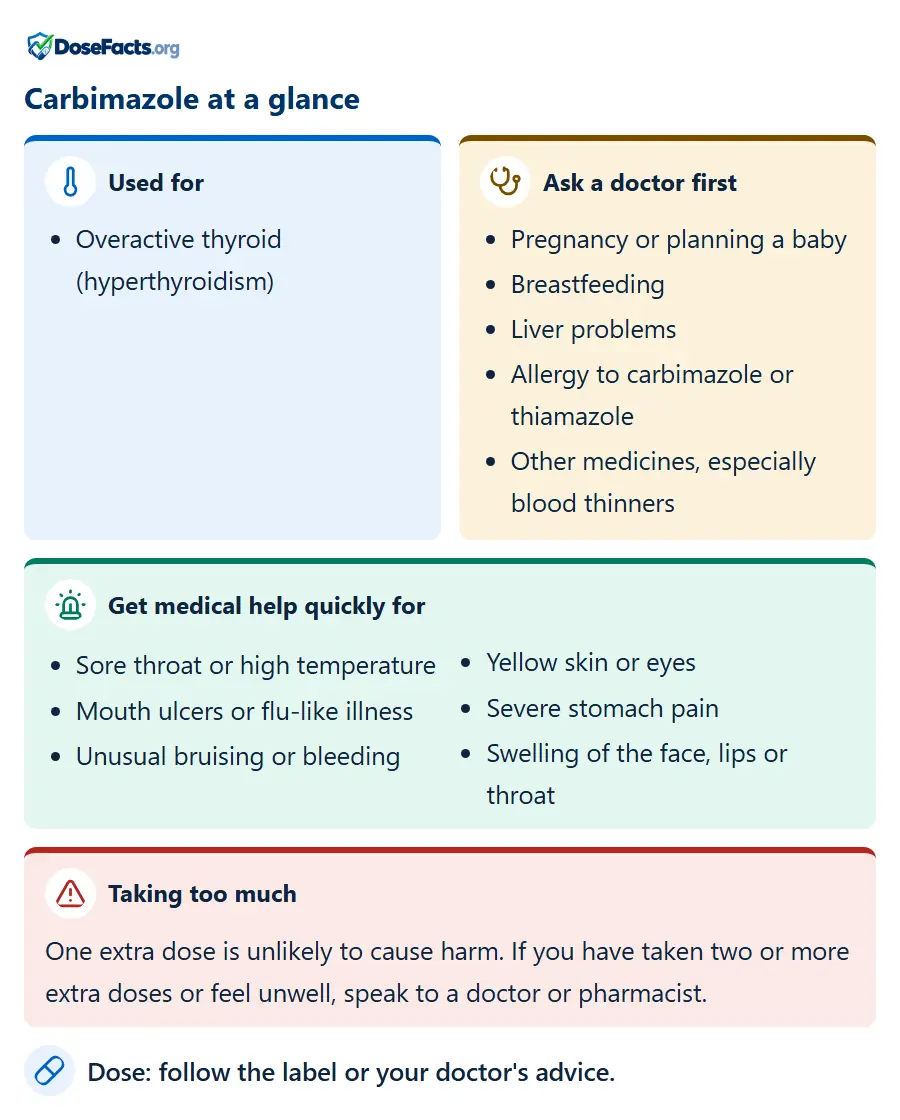
Carbimazole is a prescription medicine for an overactive thyroid (hyperthyroidism). It lowers the amount of thyroid hormone the thyroid gland makes. It is taken under a doctor's supervision with regular blood tests. A sore throat, fever, mouth ulcers or unusual bruising while taking it needs urgent medical advice.
Also known as: Carbimazole tablet, Carbimazole 5 mg, Neo-Mercazole, Neomercazole, Antithyroid tablet
Pharmacist review in progress. This page is based on the sources listed below and is being checked by our registered pharmacist.
How does Carbimazole work?
Carbimazole is changed in the body into thiamazole (methimazole), which stops the thyroid gland from using iodine to make thyroid hormone. As the hormone level falls, symptoms such as a fast heartbeat, shakiness and weight loss ease.
How to take Carbimazole
Follow the label or your doctor's advice. The doctor sets the dose, adjusts it using thyroid blood tests, and decides when to lower or stop it. Do not stop or change it on your own.
Side effects of Carbimazole
Many people have no problems or only mild ones that fade within a few weeks. A few effects are serious and need quick medical advice.
Uncommon or mild
- Nausea or vomiting
- Dizziness
- Headache
- Painful joints
- Itchy skin or a mild rash
- Thinning hair
Rare but serious: get medical help
- High temperature, sore throat, mouth ulcers, severe tiredness or a flu-like illness: these can be signs of a low white blood cell count. Contact a doctor or go to hospital straight away
- Signs of infection, or bruising and bleeding more easily than usual
- Yellow skin or eyes, or dark urine (possible liver problems)
- Sudden severe stomach pain (possible pancreatitis)
- Muscle pain or weakness, nerve pain, or passing less urine
- Swelling of the lips, mouth or throat or difficulty breathing (a severe allergic reaction). Get emergency help
Who should be careful
Carbimazole affects the blood and the liver in a small number of people, so blood tests and quick reporting of symptoms matter.
When the label says not to use it
- Allergy to carbimazole, thiamazole or any ingredient of the tablet
- Blood problems: if you get a sore throat, fever, mouth ulcers or flu-like symptoms, get medical help at once and mention that you take carbimazole
- Pregnancy: carbimazole is not often recommended in pregnancy. Tell your doctor straight away if you are pregnant or planning a baby, and do not stop it on your own
- Breastfeeding: usually acceptable, but tell your doctor; watch the baby for poor feeding or unusual sleepiness
- Liver problems: report yellow skin or eyes or dark urine
- Stopping: do not stop without your doctor, because thyroid hormone levels can rise and symptoms can return
- Allergy to carbimazole, thiamazole or any ingredient
Medicines and things that interact with Carbimazole
Tell your doctor or pharmacist about every medicine you take. Changing thyroid hormone levels can change how some other medicines work.
- Blood thinners such as warfarin: their effect can change as the thyroid becomes controlled, so clotting tests may be needed
- Digoxin and some asthma medicines (such as theophylline): their dose may need review as thyroid levels change
- Iodine-containing products and supplements, including some seaweed or kelp products: ask your doctor
Effects on lab tests
- Thyroid blood tests (thyroid hormone levels): used to set and adjust the dose
- Blood counts if a sore throat, fever or infection symptoms appear
If someone takes too much
One extra dose is unlikely to cause more side effects. If you have taken two or more extra doses, or feel unwell, speak to a doctor or pharmacist; if someone is very unwell, call 112 or go to the nearest hospital and take the pack with you.
Regulatory status in India
Approved for sale in India as a prescription medicine. Single-ingredient carbimazole is not on the CDSCO section 26A banned list.
Type of medicine
Carbimazole belongs to this type of medicine.
Medicines that contain Carbimazole
These medicines sold in India contain Carbimazole. They are listed A to Z, not ranked.
- Neo-Mercazole 5 · 5 mg tablet
What is Carbimazole used for?
Medicines that contain Carbimazole are used for these conditions.
Common questions
What should I do if I get a sore throat or fever on carbimazole?
Get medical help straight away, and tell them you take carbimazole. A sore throat, fever, mouth ulcers or a flu-like illness can be a sign of a low white blood cell count, which needs a blood test. Do not wait for it to pass.
How long is carbimazole taken for?
The doctor decides. Treatment often lasts 12 to 18 months, then the dose is lowered and stopped, though some people need it for longer. Blood tests guide the changes. Do not stop on your own, because symptoms can return.
Can I take carbimazole in pregnancy?
It is not often recommended in pregnancy, and doctors may switch to another medicine. If you are pregnant or planning a baby, tell your doctor straight away. Do not stop it yourself, because an untreated overactive thyroid can also affect the baby.
Sources
- Carbimazole. NHS (UK)
- Carbimazole: how and when to take it. NHS (UK)
- Carbimazole: side effects. NHS (UK)
- Carbimazole: pregnancy, breastfeeding and fertility. NHS (UK)
- Overactive thyroid (hyperthyroidism). NHS (UK)
- ATC/DDD Index: H03BB Sulfur-containing imidazole derivatives. WHO Collaborating Centre for Drug Statistics Methodology
- List of drugs prohibited for manufacture and sale through gazette notifications under section 26A of the Drugs & Cosmetics Act 1940. Central Drugs Standard Control Organisation (CDSCO)