
Glimepiride: Uses, How It Works, Medicines
Also in: हिन्दी தமிழ் मराठी తెలుగు ಕನ್ನಡ বাংলা ગુજરાતી മലയാളം ਪੰਜਾਬੀ
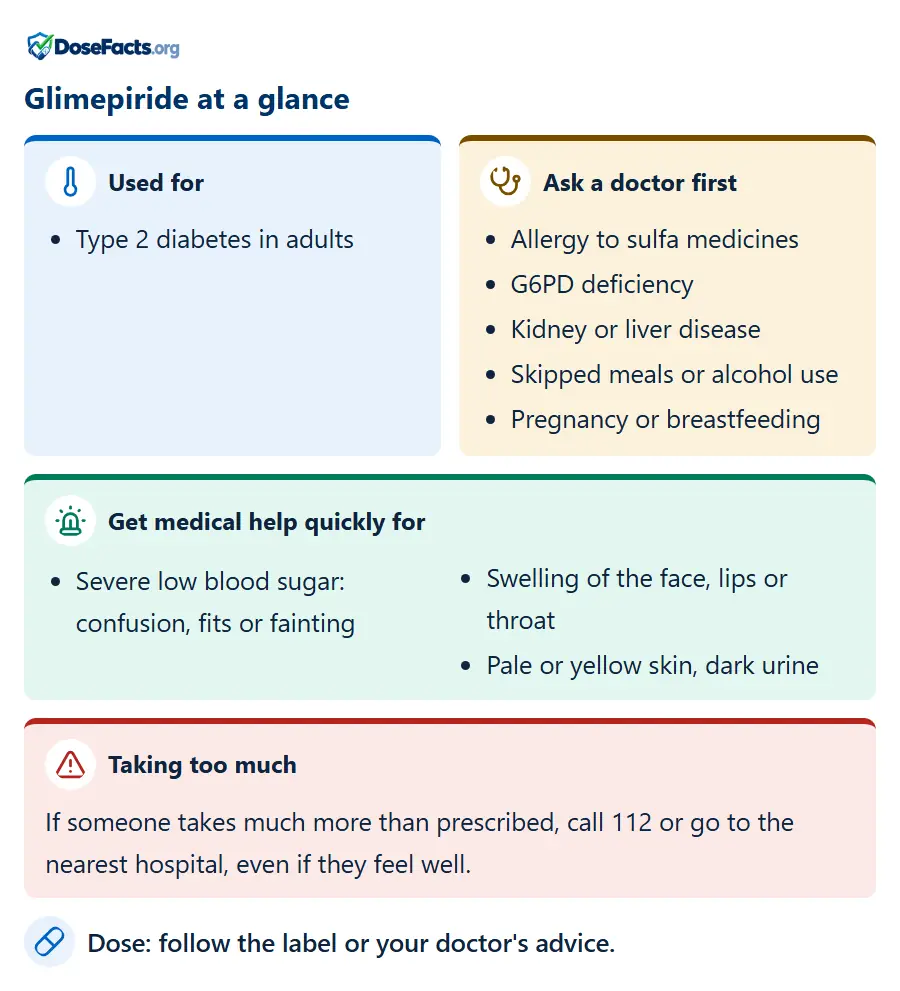
Glimepiride is a medicine used to treat type 2 diabetes in adults. It helps the pancreas release more insulin, which lowers blood sugar. In India it is a prescription medicine, used together with the diet and activity plan your doctor gives you.
Also known as: Glimepiride 2 mg, Glimepiride tablet, Glimepiride IP, Sulfonylurea, Diabetes tablet
Pharmacist review in progress. This page is based on the sources listed below and is being checked by our registered pharmacist.
How does Glimepiride work?
Glimepiride makes the insulin-producing cells of the pancreas release more insulin, and more insulin helps the body move sugar out of the blood. It works only while the pancreas can still make insulin.
How to take Glimepiride
Follow the label or your doctor's advice. Glimepiride is usually taken once a day with breakfast or the first main meal, and the dose is set by your doctor. Do not skip meals, and do not stop it without talking to your doctor.
Side effects of Glimepiride
Most people take this medicine without serious problems. Some effects are mild, but a few need medical help.
Uncommon or mild
- Low blood sugar: shaking, sweating, hunger, headache, dizziness, confusion
- Nausea or stomach discomfort
- Weight gain
Rare but serious: get medical help
- Severe low blood sugar: confusion, fits or loss of consciousness. Get emergency medical help
- Swelling of the face, lips or throat, or a severe rash (allergic reaction)
- Pale or yellow skin and dark urine (breakdown of red blood cells, a risk in G6PD deficiency)
- Yellow skin or eyes (liver problems)
Who should be careful
Some people need to check with a doctor before taking it, or need extra care while taking it. Tell every doctor, dentist and hospital that you take it.
When the label says not to use it
- Allergy to glimepiride, its ingredients or sulfonamide medicines
- Type 1 diabetes or diabetic ketoacidosis
- Skipping meals, alcohol, hard exercise, older age, kidney or liver problems: low blood sugar becomes more likely
- Allergy to sulfonamide (sulfa) medicines: glimepiride may also cause a reaction
- G6PD deficiency: tell your doctor
- Illness with vomiting, diarrhoea or fever: contact your doctor or pharmacist for advice about your diabetes medicines. Do not stop on your own unless told
- Pregnancy and breastfeeding: not usually used; the newborn can have low blood sugar
Medicines and things that interact with Glimepiride
This medicine can change how other medicines work, and some medicines change its effect. Tell your doctor or pharmacist about everything you take, including herbal remedies.
- Other diabetes medicines and insulin: low blood sugar becomes more likely
- Fluconazole, miconazole, NSAID painkillers and ACE inhibitors: they can strengthen its effect
- Beta-blockers: they can hide the signs of low blood sugar
- Steroids, thiazide water tablets, rifampicin and oestrogens: they can raise blood sugar
Effects on lab tests
- Blood sugar and HbA1c tests: used to check how well the diabetes is controlled
If someone takes too much
Taking much more than prescribed is a medical matter. If someone has taken too much, call 112 or go to the nearest hospital and take the medicine pack with you.
Regulatory status in India
Approved for sale in India as a prescription medicine. Single-ingredient glimepiride is not on the CDSCO list of banned medicines, but several fixed-dose combinations that include it (with pioglitazone, metformin or other ingredients) have been prohibited under section 26A, so check the ingredient list on the pack.
Type of medicine
Glimepiride belongs to this type of medicine.
Medicines that contain Glimepiride
These medicines sold in India contain Glimepiride. They are listed A to Z, not ranked.
- Amaryl 2 · 2 mg tablet
What is Glimepiride used for?
Medicines that contain Glimepiride are used for these conditions.
Other medicines of the same type
These active ingredients are of the same type as Glimepiride.
Common questions
Is Glimepiride a medicine for sugar (diabetes)?
Yes. Glimepiride is used to lower blood sugar in adults with type 2 diabetes, alongside diet and activity. It is a prescription medicine, so do not start, stop or change it without your doctor's advice.
Why can glimepiride cause low blood sugar?
It makes the pancreas release insulin even when blood sugar is not high. Skipping a meal, alcohol, hard exercise or other diabetes medicines make low blood sugar more likely. Know the warning signs and follow your doctor's plan.
Sources
- Glimepiride tablets: prescribing information (label effective 11/2024). DailyMed, US National Library of Medicine
- Gliclazide: a medicine for type 2 diabetes. NHS (UK)
- Type 2 diabetes: treatment. NHS (UK)
- List of drugs prohibited for manufacture and sale through gazette notifications under section 26A of the Drugs & Cosmetics Act 1940. Central Drugs Standard Control Organisation (CDSCO)
- National Formulary of India. Indian Pharmacopoeia Commission