
Cholecalciferol (vitamin D3)
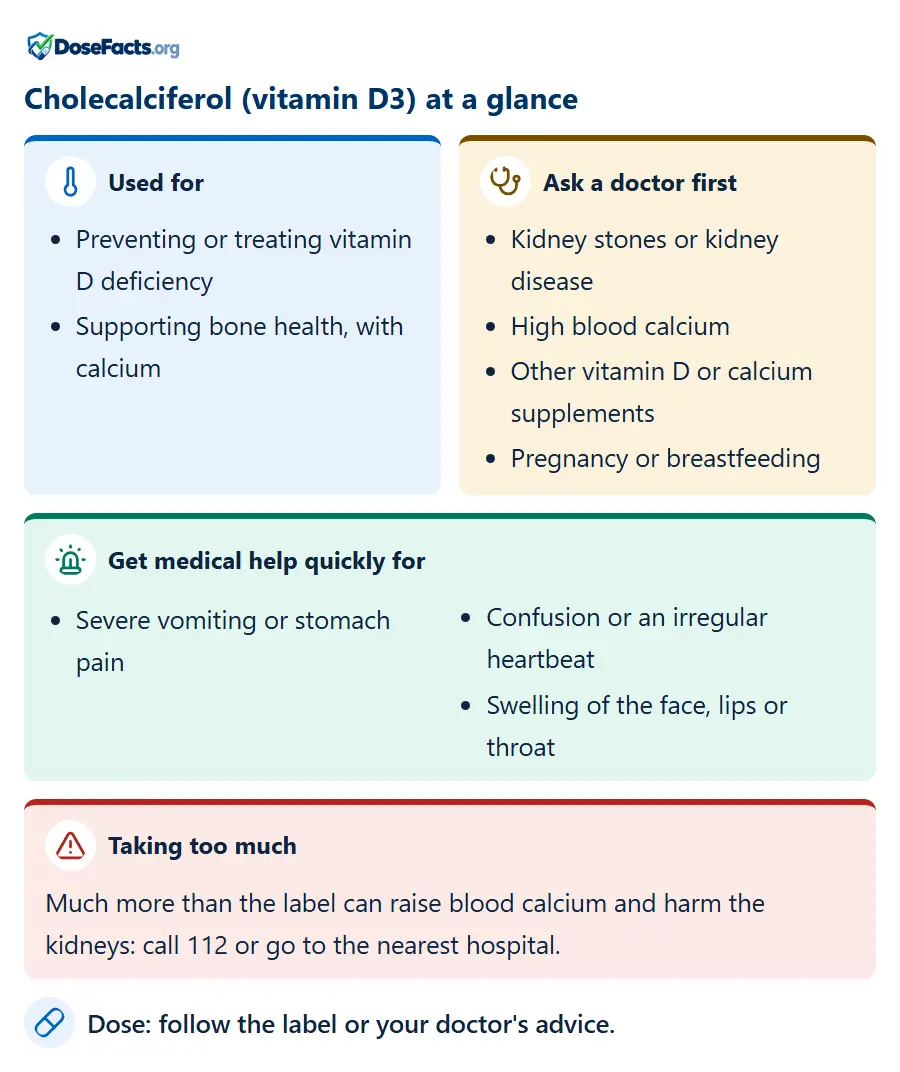
Cholecalciferol is vitamin D3, which helps the body absorb calcium and keep bones, teeth and muscles healthy. It is used to prevent or treat vitamin D deficiency, which can cause rickets in children and bone pain and weakness (osteomalacia) in adults. Too much for a long time can raise blood calcium and harm the kidneys and heart.
Also known as: Vitamin D3, Colecalciferol, Cholecalciferol tablet, Vitamin D, D3 supplement
Pharmacist review in progress. This page is based on the sources listed below and is being checked by our registered pharmacist.
How does Cholecalciferol (vitamin D3) work?
Vitamin D3 is changed by the liver and kidneys into its active form. This helps the gut absorb calcium and phosphate from food, which the body uses to build and maintain bones, teeth and muscles.
How to take Cholecalciferol (vitamin D3)
Follow the label or your doctor's advice. Needs differ by age and health, and doctors decide the amount for people with deficiency.
Side effects of Cholecalciferol (vitamin D3)
Vitamin D3 at the label dose is well tolerated by most people. Problems mainly come from taking too much for a long time.
Uncommon or mild
- Nausea or an upset stomach
- Constipation
Rare but serious: get medical help
- Excess thirst, passing a lot of urine, confusion, muscle weakness or an irregular heartbeat (possible high blood calcium)
- Severe stomach pain or ongoing vomiting
- Swelling of the face, lips or throat, or difficulty breathing (severe allergic reaction). Call 112
Who should be careful
Some people need to check with a doctor before taking vitamin D supplements.
When the label says not to use it
- High levels of calcium in the blood or urine
- Allergy to any ingredient of the product
- Kidney disease or kidney stones
- Sarcoidosis or some other conditions that raise blood calcium
- Taking more than the label says, or several supplements that each contain vitamin D or calcium
- Pregnancy and breastfeeding: ask your doctor before taking supplements
Medicines and things that interact with Cholecalciferol (vitamin D3)
Tell your doctor or pharmacist about everything you take, including calcium and other supplements.
- Calcium supplements: together with vitamin D they can raise blood calcium if too much is taken
- Water tablets of the thiazide type: can raise blood calcium
- Digoxin: high calcium can affect the heart rhythm
If someone takes too much
Long-term excess vitamin D can cause too much calcium in the blood, with thirst, vomiting, confusion and kidney damage. If someone has taken much more than the label says, call 112 or go to the nearest hospital and take the pack with you.
Regulatory status in India
Sold in India as a vitamin D supplement. Single-ingredient cholecalciferol is not on the CDSCO list of medicines banned under section 26A of the Drugs and Cosmetics Act. Whether a product is licensed as a medicine or a food supplement, and any prescription status, must be read from the pack.
Type of medicine
Cholecalciferol (vitamin D3) belongs to this type of medicine.
Medicines that contain Cholecalciferol (vitamin D3)
These medicines sold in India contain Cholecalciferol (vitamin D3). They are listed A to Z, not ranked.
- Calcirol 60K · 60,000 IU granules in a sachet (verify on pack)
- Cipcal 500 · VERIFY on pack tablet
- Shelcal 500 · VERIFY on pack tablet
- Uprise D3 1000 · 1000 IU verify on pack
What is Cholecalciferol (vitamin D3) used for?
Medicines that contain Cholecalciferol (vitamin D3) are used for these conditions.
Other medicines of the same type
These active ingredients are of the same type as Cholecalciferol (vitamin D3).
Common questions
What is vitamin D3 used for?
Vitamin D3 helps the body absorb calcium and keeps bones, teeth and muscles healthy. It is used to prevent or treat vitamin D deficiency, which can cause rickets in children and osteomalacia in adults. Take it as the label says or as your doctor advises.
Can I take too much vitamin D?
Yes. The NHS says adults should not take more than 100 micrograms (4,000 IU) a day. Long-term excess can build up calcium and harm the bones, kidneys and heart. Count all supplements that contain vitamin D and ask your doctor if you are unsure.
Why is vitamin D often sold with calcium?
Vitamin D helps the gut absorb calcium, so the two are often combined for bone health. Check the label for the amount of each, and do not add other calcium or vitamin D supplements without asking your doctor or pharmacist.
Sources
- Vitamin D. NHS (UK)
- Osteoporosis. NHS (UK)
- ATC/DDD Index: A11CC05 Colecalciferol. WHO Collaborating Centre for Drug Statistics Methodology
- List of drugs prohibited for manufacture and sale through gazette notifications under section 26A of the Drugs & Cosmetics Act 1940. Central Drugs Standard Control Organisation (CDSCO)