
Vitamin E: Uses, How It Works, Medicines
Vitamin E is a vitamin that helps keep skin and eyes healthy and supports the body's defence against infection. Most people get enough from a varied diet, including plant oils, nuts and seeds. Supplements are used where a doctor or pharmacist advises them, and high doses are best avoided.
Also known as: Tocopherol, Alpha-tocopherol, Tocopheryl acetate, Vitamin E capsule, Vitamin E 400 mg
Pharmacist review in progress. This page is based on the sources listed below and is being checked by our registered pharmacist.
How does Vitamin E work?
Vitamin E is a fat-soluble vitamin that the body stores and uses in many tissues, including skin and eyes. Because it is stored, taking more than needed over a long time adds up.
How to take Vitamin E
Follow the label or your doctor's advice. UK guidance (NHS) says adult men need about 4 mg and adult women about 3 mg a day, which a varied diet usually provides.
Side effects of Vitamin E
Vitamin E at the amounts on a normal supplement pack is usually well tolerated.
Uncommon or mild
- Mild stomach upset or nausea
Rare but serious: get medical help
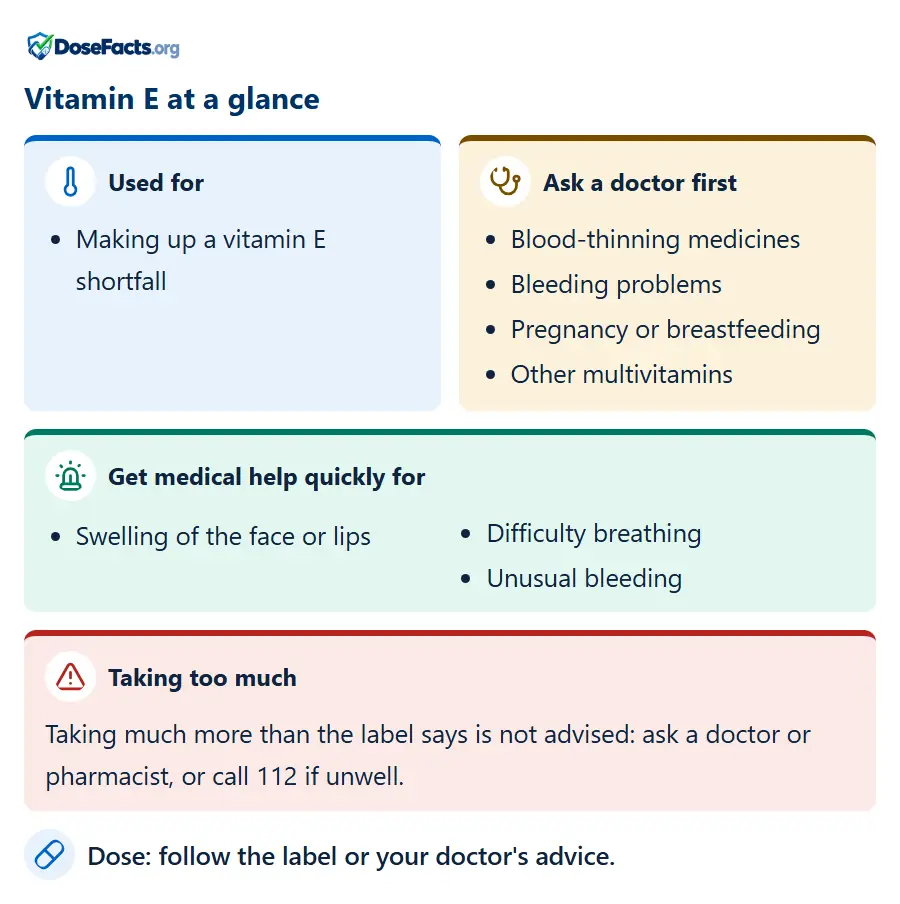
- Swelling of the face, lips or throat, or difficulty breathing (an allergic reaction). Get medical help immediately
- Unusual bruising or bleeding
Who should be careful
Most people can take vitamin E at label amounts, but high doses are not advised.
- The NHS advises against taking too much vitamin E; up to 540 mg (800 IU) a day in supplements is unlikely to cause harm, but there is not enough evidence on higher doses
- Blood-thinning medicines or a bleeding problem: ask a doctor before taking a vitamin E supplement
- Pregnancy or breastfeeding: ask a doctor or pharmacist before taking a supplement
- Check other products you take, as many multivitamins also contain vitamin E
If someone takes too much
A single extra capsule is unlikely to cause serious problems, but regularly taking much more than the label says is not advised. If someone has taken a large amount, ask a doctor or pharmacist, or call 112 or go to the nearest hospital if they are unwell.
Regulatory status in India
Vitamin E is not on the CDSCO list of medicines banned under section 26A of the Drugs and Cosmetics Act. Whether a vitamin E product is sold as a medicine or a food supplement depends on the product; check the pack.
Type of medicine
Vitamin E belongs to this type of medicine.
Medicines that contain Vitamin E
These medicines sold in India contain Vitamin E. They are listed A to Z, not ranked.
What is Vitamin E used for?
Medicines that contain Vitamin E are used for these conditions.
Other medicines of the same type
These active ingredients are of the same type as Vitamin E.
Common questions
What does vitamin E do?
It helps keep skin and eyes healthy and supports the immune system, the body's defence against illness. It is found in plant oils such as sunflower and olive oil, nuts, seeds and wheatgerm. Most people get enough from a varied diet.
Is it safe to take a high dose of vitamin E?
There is not enough evidence on high-dose supplements, and the NHS advises against taking too much. Up to 540 mg (800 IU) a day is unlikely to cause harm. Check the strength on the pack and ask a doctor or pharmacist before going above it.
Sources
- Vitamin E. NHS (UK)