
Levothyroxine: Uses, How It Works, Medicines
Also in: हिन्दी தமிழ் मराठी తెలుగు ಕನ್ನಡ বাংলা ગુજરાતી മലയാളം ਪੰਜਾਬੀ
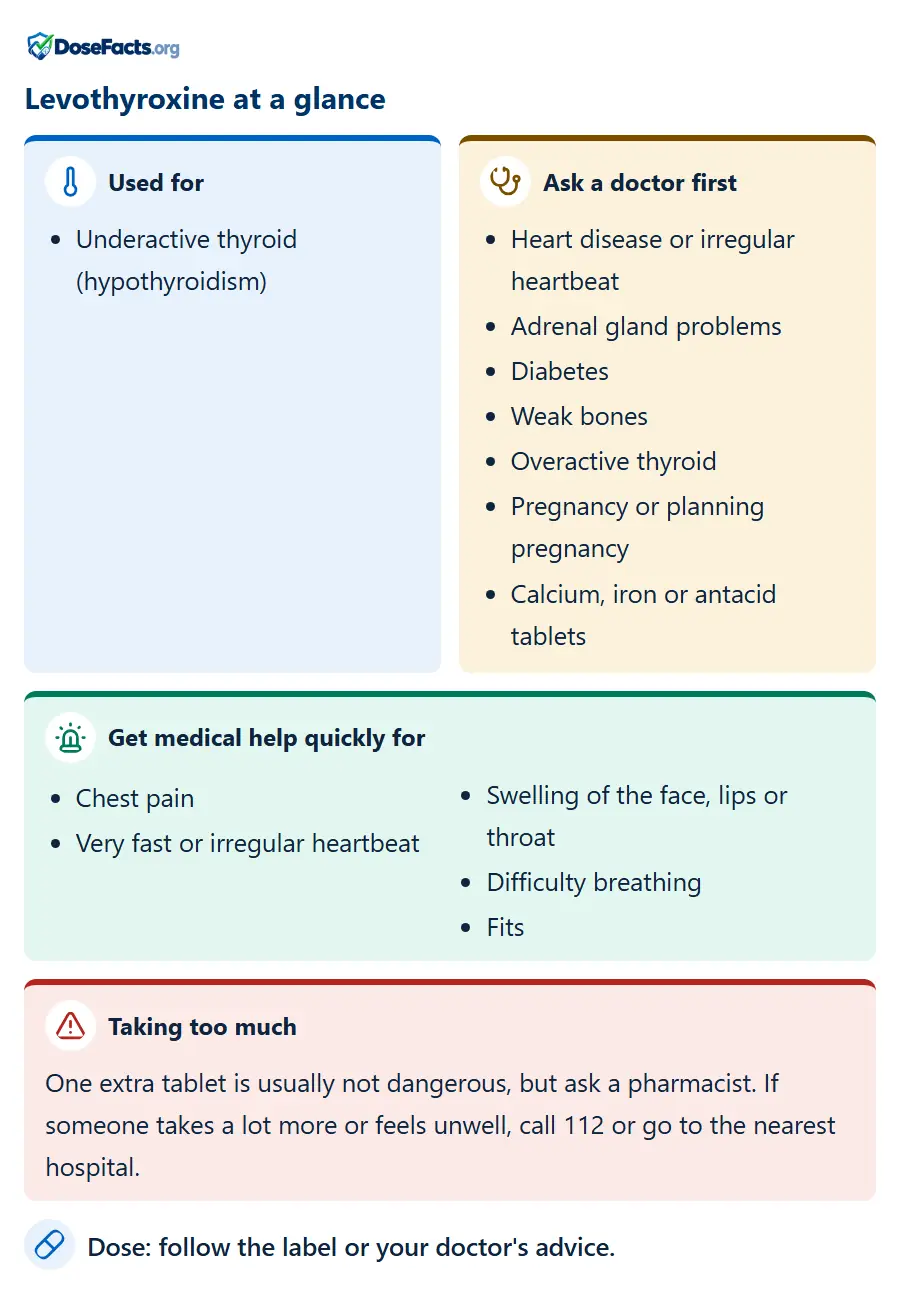
Levothyroxine is a man-made form of the thyroid hormone thyroxine. It is used to treat an underactive thyroid (hypothyroidism) by replacing the hormone the body cannot make enough of. In India it is a prescription medicine that is usually taken every day for life, with the dose set by blood tests.
Also known as: Levothyroxine sodium, Thyroxine, Thyroxine sodium, L-thyroxine, Levothyroxine 50 mcg, Levothyroxine tablet, Thyroid tablet
Pharmacist review in progress. This page is based on the sources listed below and is being checked by our registered pharmacist.
How does Levothyroxine work?
Levothyroxine is a copy of the body's main thyroid hormone, so taking it each day replaces what the thyroid cannot make and brings the level in the blood back into the normal range. Tissues convert it into the more active form, T3, as the body needs it.
How to take Levothyroxine
Follow the label or your doctor's advice. Levothyroxine is usually taken once a day on an empty stomach, 30 to 60 minutes before breakfast, at the same time each day. The dose is individual and is adjusted using blood tests, so never change it on your own.
Side effects of Levothyroxine
When the dose is right, levothyroxine usually causes few side effects. Most side effects happen when the dose is too high, which is why regular blood tests matter.
Uncommon or mild
- Trouble sleeping
- Headache
- Feeling anxious or nervous
- Sweating or feeling too hot
- Hair loss
- Shaky hands (tremor) or a fast, pounding heartbeat
- Diarrhoea or weight loss without trying
Rare but serious: get medical help
- Signs of a severe allergic reaction: swelling of the face, lips, tongue or throat, or difficulty breathing. Get emergency medical help straight away
- Chest pain, or a very fast or irregular heartbeat, especially if you have heart problems
- A high temperature with a racing heart and restlessness, which needs urgent medical attention
- Fits (seizures), which have been reported rarely
Who should be careful
Levothyroxine replaces a hormone the body needs, so it is usually taken for life, and the dose is set by blood tests. Too much is as much of a problem as too little.
When the label says not to use it
- Allergy to levothyroxine or any ingredient of the tablet
- Adrenal gland failure that has not been treated
- Use for weight loss, or for a normal thyroid
- Heart disease, high blood pressure or an irregular heartbeat: too much thyroid hormone can strain the heart, so the doctor usually starts with a low dose and raises it slowly
- Adrenal gland problems (such as Addison's disease): these must be treated first, because levothyroxine can make them worse
- Diabetes: levothyroxine can change blood sugar, so your diabetes medicine doses may need to be reviewed
- Weak bones (osteoporosis) or being past the menopause: too high a dose can reduce bone strength, so the lowest effective dose is used
- Overactive thyroid: levothyroxine is generally not suitable
- Pregnancy or planning pregnancy: the dose often needs to rise during pregnancy, so tell your doctor early and do not stop the medicine on your own
- Not for weight loss: levothyroxine must not be used to lose weight, because larger doses can cause serious, even life-threatening, harm
- Biotin (vitamin B7) supplements, including those for hair and nails: they can affect thyroid blood test results, so tell the doctor or the lab
- Past allergic reaction to levothyroxine or any ingredient in the tablet
Medicines and things that interact with Levothyroxine
Several common medicines and supplements stop the body absorbing levothyroxine, and a few change how much is needed. Tell your doctor or pharmacist about everything you take.
- Calcium tablets, iron tablets, antacids and sucralfate: they stop levothyroxine being absorbed properly, so they are usually taken several hours apart. Ask your pharmacist what gap to leave
- Medicines that lower stomach acid, such as omeprazole and other proton pump inhibitors: they can reduce how much levothyroxine is absorbed, so your doctor may check your thyroid blood tests
- Cholesterol medicines called bile acid sequestrants (such as colestyramine): they bind levothyroxine in the gut
- Soya products, high-fibre foods, walnuts and grapefruit juice: they can reduce absorption if taken close to the tablet
- Phenobarbital, rifampicin and sertraline: they may increase the dose of levothyroxine needed
- Warfarin and similar blood thinners: levothyroxine can increase their effect, so clotting tests may be needed
- Digoxin, amiodarone, some antidepressants and diabetes medicines: their effect or the dose needed can change when thyroid treatment starts or changes
- Biotin supplements: they can give misleading results in thyroid blood tests
Effects on lab tests
- Thyroid stimulating hormone (TSH) blood test: used to check and adjust the dose
- Biotin (vitamin B7) supplements can give misleading thyroid test results; tell the doctor or the lab
If someone takes too much
Taking one extra tablet by mistake is usually not dangerous, but speak to a pharmacist or doctor for advice. If someone has taken a lot more than prescribed, or has chest pain, a racing or irregular heartbeat, confusion, fits or feels very unwell, call 112 or go to the nearest hospital and take the medicine pack with you.
Regulatory status in India
Approved for sale in India as a prescription medicine. Levothyroxine is not on the CDSCO list of banned medicines (the section 26A list has no levothyroxine entry), so check the ingredient list and strength on the pack.
Type of medicine
Levothyroxine belongs to this type of medicine.
Medicines that contain Levothyroxine
These medicines sold in India contain Levothyroxine. They are listed A to Z, not ranked.
- Thyronorm 50 · 50 mcg tablet
What is Levothyroxine used for?
Medicines that contain Levothyroxine are used for these conditions.
Common questions
Is Thyronorm 50 the same as levothyroxine?
Thyronorm 50 is a brand name for a tablet that contains 50 mcg of levothyroxine and nothing else. Other brands and generic tablets contain the same medicine in different strengths. Check the strength on the pack.
When is levothyroxine usually taken?
It is taken once a day at the same time, usually in the morning on an empty stomach, 30 to 60 minutes before breakfast, tea, coffee or other medicines, and swallowed whole with water. Follow your doctor's advice or the label.
Can I take levothyroxine with calcium, iron or antacids?
These medicines stop levothyroxine being absorbed, so they should be taken several hours apart. Ask your pharmacist or doctor what gap to leave, and do not change the timing on your own.
How long will I need to take levothyroxine?
Most people with an underactive thyroid take it for life. Stopping can bring the symptoms back. Your doctor will check your thyroid blood tests regularly and adjust the dose. Do not stop because you feel better.
Can levothyroxine be used to lose weight?
No. It must not be used to lose weight. If your thyroid is normal, larger doses do not help and can cause serious, even life-threatening, harm. It is only for people whose doctor has diagnosed an underactive thyroid.
What are the signs that my levothyroxine dose is too high?
A fast or pounding heartbeat, shakiness, sweating, trouble sleeping, anxiety, diarrhoea and weight loss. Do not reduce the dose yourself. Contact your doctor, who can check your blood test and adjust the dose.
Can I take levothyroxine in pregnancy?
Do not stop it. Untreated hypothyroidism can harm both mother and baby, and the dose often needs to increase during pregnancy. Tell your doctor as soon as you plan or find you are pregnant, so your thyroid tests can be checked.
Sources
- Levothyroxine: a medicine for an underactive thyroid (hypothyroidism). NHS (UK)
- Underactive thyroid (hypothyroidism): treatment. NHS (UK)
- Underactive thyroid (hypothyroidism). NHS (UK)
- SYNTHROID (levothyroxine sodium) tablets: prescribing information (label revised 2/2017, repackager copy). DailyMed, US National Library of Medicine
- Levothyroxine. StatPearls, NCBI, US National Library of Medicine
- Hypothyroidism. StatPearls, NCBI, US National Library of Medicine
- National Formulary of India. Indian Pharmacopoeia Commission
- List of drugs prohibited for manufacture and sale through gazette notifications under section 26A of the Drugs & Cosmetics Act 1940. Central Drugs Standard Control Organisation (CDSCO)
- National List of Essential Medicines 2022. Ministry of Health and Family Welfare, Government of India (copy hosted by CDSCO)